Deutsch
 English
 Français
 Español
 Italiano
 Svenska
 Čeština
 Nederlands
 Русский
 Українська
 Polski



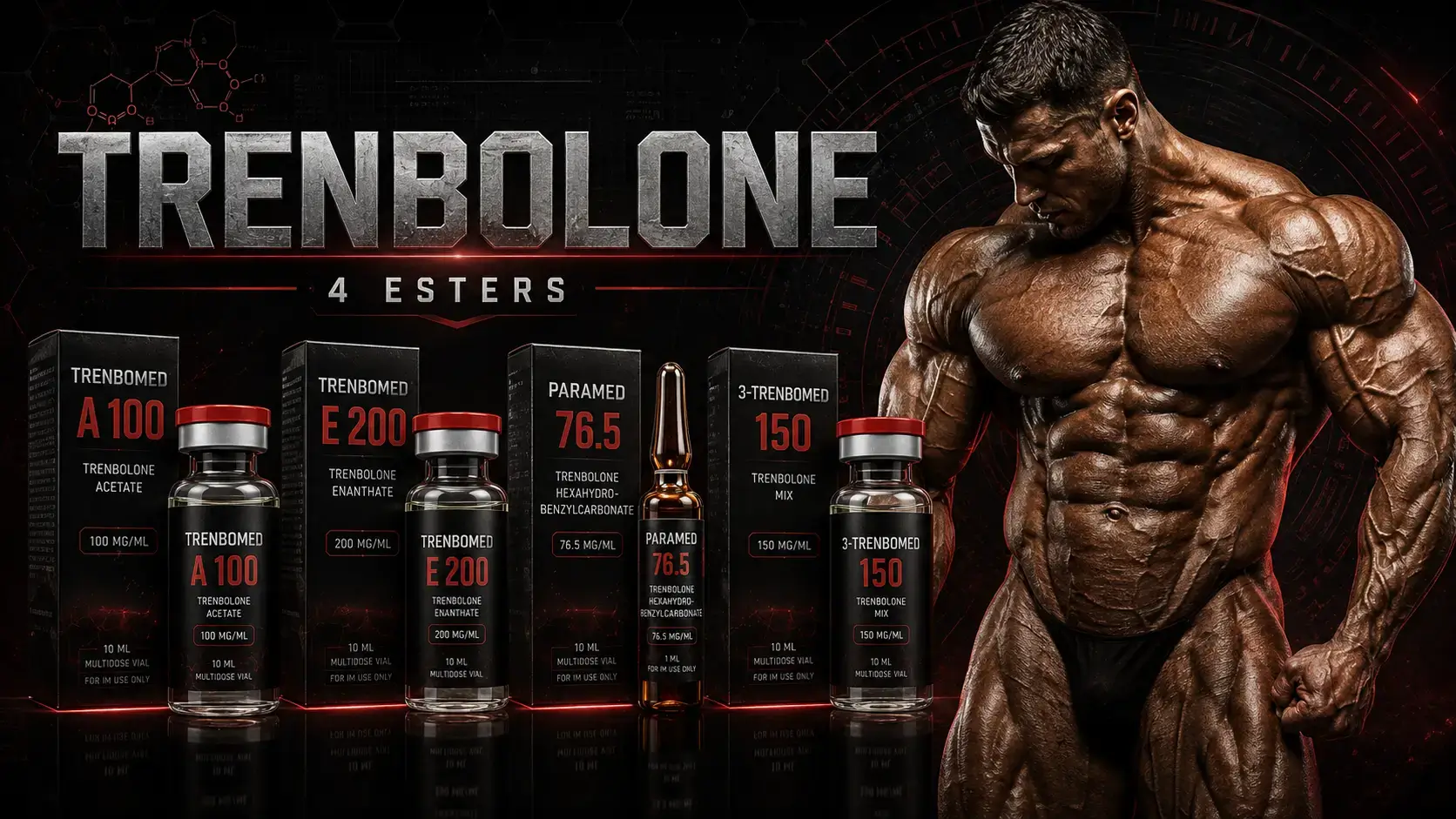
Trenbolone is one of the best-known anabolic-androgenic steroids in bodybuilding. Within the bodybuilding community, it is associated with potent anabolic effects, increases in lean muscle mass and strength, and the preservation of muscle during a calorie deficit.
At the same time, trenbolone is surrounded by a particularly large number of exaggerated claims. It is often described as being several times “stronger than testosterone,” credited with direct fat-burning properties, and sometimes presented as being able to prevent muscle loss almost completely. Such claims should not be taken literally. High-quality clinical research on trenbolone in athletes is extremely limited, making it impossible to reliably predict the exact amount of muscle or strength gain or the rate at which body composition may change.
Another important consideration is that trenbolone is not a modern pharmaceutical drug approved for human use. Much of what is known about its properties comes from experimental research, veterinary applications, and observations of the non-medical use of anabolic steroids.
Trenbolone should therefore be viewed in bodybuilding as a highly potent compound with potentially powerful anabolic effects, but also with a significant and not always predictable side-effect profile.
Trenbolone: Key Characteristics and Reasons for Its Popularity Among Athletes
Trenbolone is a synthetic anabolic-androgenic steroid and a derivative of nandrolone. In bodybuilding, it became widely known for combining strong androgenic activity with the absence of direct aromatization into estrogens.
This characteristic largely explains its popularity among athletes seeking a leaner, harder and more defined appearance. Unlike strongly aromatizing compounds, trenbolone itself is not converted into estradiol by the aromatase enzyme and therefore does not directly contribute to estrogen-related water retention through its own aromatization.
This does not mean, however, that gynecomastia, fluid retention or other hormonal complications are impossible during its use. In real-world bodybuilding practices, athletes often combine multiple compounds, while the endocrine system responds to the overall hormonal environment rather than to one substance in isolation.
Trenbolone has become established in bodybuilding because of several characteristics:
- strong binding affinity for androgen receptors;
- support of anabolic processes;
- lack of direct aromatization;
- potential preservation of lean body mass during an energy deficit;
- less contribution from estrogen-related water retention to body-weight gain compared with some aromatizing AAS.
For these reasons, trenbolone is used both during bulking and cutting phases. Its reputation as a “versatile” compound should nevertheless be viewed cautiously. Different goals require different nutrition and training strategies, and the use of a potent AAS does not guarantee the same outcome for every athlete.
How Trenbolone Works: Effects on Anabolism, Strength and Muscle Mass
The primary effects of trenbolone are linked to its interaction with androgen receptors. Activation of these receptors alters the expression of genes involved in protein metabolism, muscle tissue regulation and other androgen-dependent processes.
Several potentially relevant mechanisms are discussed in a bodybuilding context:
- enhancement of anabolic signalling in muscle tissue;
- support of a positive nitrogen balance;
- reduction of certain catabolic processes;
- effects on glucocorticoid signalling pathways;
- effects on red blood cell production, a characteristic associated with AAS more broadly.
Trenbolone is sometimes said to directly “suppress cortisol.” This is an oversimplification. It is more accurate to describe a possible influence on glucocorticoid signalling and anti-catabolic mechanisms. Trenbolone does not shut down cortisol production and does not make muscle tissue completely resistant to catabolism.
Likewise, increases in strength cannot be explained solely by higher red blood cell counts or improved oxygen delivery. Strength is influenced simultaneously by changes in muscle mass, neuromuscular adaptation, training, recovery and the overall androgenic environment.
An increase in red blood cell count and hematocrit should not be viewed purely as a benefit either. Excessive changes in blood parameters may increase cardiovascular strain and therefore require particular attention.
The popular claim that trenbolone is “five times stronger than testosterone” should also be interpreted cautiously. Such ratios largely originate from experimental assessments of anabolic and androgenic activity and do not mean that a person will gain five times as much muscle or strength.
Trenbolone for Lean Muscle Gain: Building Muscle Without Excessive Water Retention
The term “lean muscle mass” is widely used in bodybuilding, although weight gained during a cycle never consists exclusively of newly formed muscle tissue. Changes on the scale may reflect muscle, glycogen, intracellular and extracellular fluid, gastrointestinal contents and body fat.
Trenbolone developed its reputation for producing relatively “dry” gains largely because it does not aromatize. As a result, increases in body weight are generally associated with less estrogen-related water retention than with some aromatizing compounds.
This does not mean that trenbolone removes water from the body. It is not a diuretic and does not eliminate fluid from the extracellular space. Fluid balance is influenced by sodium intake, carbohydrate intake, stress, hormonal status, kidney function and other compounds being used.
Increasing lean body mass also requires sufficient energy, protein and an appropriate training stimulus. Even a strongly anabolic environment does not replace the fundamental principles of progressive overload and adequate nutrition.
Within bodybuilding, trenbolone is commonly associated with:
- support of a positive nitrogen balance;
- increases in lean body mass;
- a harder and denser muscular appearance;
- increased strength;
- less pronounced estrogen-related water retention.
The rate and magnitude of these changes vary considerably between individuals. Genetics, training experience, diet, sleep and the use of multiple compounds may influence the outcome as much as the choice of the individual substance itself.
Strength and Recovery with Trenbolone: Effects on Training and Performance
Improved strength is one of the main reasons athletes are interested in potent anabolic-androgenic compounds. Trenbolone has developed a particularly strong reputation in this regard.
However, claims that it increases strength “several-fold” do not reflect the complexity of strength development. Strength depends on muscle mass, neuromuscular coordination, lifting technique, training volume, recovery and individual responsiveness to androgenic stimulation.
A similar distinction is necessary when discussing recovery. An anabolic environment may support tissue repair and recovery between training sessions, but this does not mean that the body can fully recover regardless of training volume or intensity.
In fact, some of the adverse effects commonly reported with trenbolone may work in the opposite direction. Users have reported:
- sleep disturbances;
- night sweats;
- increased irritability;
- anxiety and restlessness;
- a subjective reduction in endurance performance;
- faster fatigue during aerobic exercise.
If sleep quality deteriorates significantly, actual recovery may also suffer despite the presence of a strongly anabolic environment.
Strength performance and aerobic capacity should also be considered separately. An increase in working weights does not automatically translate into improved endurance. Claims that trenbolone necessarily improves muscle oxygenation and therefore increases overall physical endurance are consequently too categorical.
Trenbolone During a Cutting Phase: Conditioning and Muscle Preservation
During a cutting phase, an athlete operates in a negative energy balance. As the calorie deficit becomes longer or more aggressive, maintaining training performance and preserving all previously gained lean body mass becomes increasingly difficult.
This is one of the reasons anabolic compounds have become common in unregulated competitive bodybuilding. Trenbolone is used in this context to maintain a strong androgenic and anabolic environment while calorie intake is restricted.
However, it does not completely prevent the breakdown of muscle tissue. With an excessively aggressive calorie deficit, inadequate protein intake, insufficient sleep or excessive training load, muscle loss can still occur.
It is also important to distinguish between muscle preservation and fat loss.
The primary mechanism behind a reduction in body fat remains a sustained energy deficit. Trenbolone does not replace that requirement and cannot independently guarantee the loss of either subcutaneous or visceral fat.
Interest in trenbolone during cutting phases is mainly related to a combination of characteristics:
- support of an anabolic environment during a calorie deficit;
- lack of direct aromatization;
- potential preservation of a greater proportion of lean body mass;
- less influence of estrogen-related water retention on physical appearance.
As body-fat levels decrease, these characteristics may allow already developed musculature to appear harder, drier and more clearly defined.
Trenbolone is not a diuretic, however. Attempts to manipulate body water through severe fluid restriction or uncontrolled use of diuretics, particularly before a competition, may present a considerably greater health risk than any potential improvement in appearance.
Trenbolone Esters: Acetate, Enanthate and Differences in Use
In sports pharmacology, trenbolone is available in several esterified forms. The best-known are trenbolone acetate and trenbolone enanthate, although trenbolone hexahydrobenzylcarbonate and preparations combining multiple esters are also encountered. All contain the same active compound but differ in their release rate and duration of action.
Trenbolone acetate is a short-acting ester. The active compound is released more quickly after injection, and its concentration also declines more rapidly after discontinuation. This allows an individual response to be assessed sooner and may make it possible to react more quickly if adverse effects occur. In the Dinespower catalogue, this form is available as Trenbomed A100 by Deus Medical.
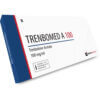
Trenbolone enanthate is longer-acting. Its concentration changes more gradually, meaning less frequent injections are generally required, while the active compound also remains in the body for longer after discontinuation. In the Dinespower catalogue, this form is available as Trenbomed E200 by Deus Medical.

Another form is Trenbolone hexahydrobenzylcarbonate, also known as Parabolan. It is a long-acting trenbolone ester with a more gradual release of the active compound. In the Dinespower catalogue, it is available as Paramed 76.5 by Deus Medical.

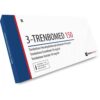
Preparations combining several esters of the same active compound are also available. For example, 3-Trenbomed by Deus Medical combines trenbolone forms with different release rates. Such blends are designed to produce a more complex pharmacokinetic profile. However, combining several esters does not make trenbolone fundamentally more effective and can make it more difficult to determine which ester is primarily influencing the current drug concentration.
The main differences between trenbolone esters involve:
- release rate;
- duration of action;
- the time required to reach relatively stable concentrations;
- the rate at which concentrations decline after discontinuation;
- how quickly an individual’s response can be assessed.
The ester itself does not make trenbolone inherently more or less anabolic. The primary difference lies in pharmacokinetics.
In bodybuilding, acetate is more commonly associated with shorter phases of preparation, while enanthate and hexahydrobenzylcarbonate are longer-acting options. Ester blends occupy an intermediate position by combining different release profiles. Such use, however, reflects non-medical bodybuilding practices rather than approved medical recommendations.
Trenbolone Before Competition: Its Role in Contest Preparation
In unregulated competitive bodybuilding, trenbolone has become established because of its combination of strong androgenic activity, lack of aromatization and potential to support the preservation of lean body mass during a calorie deficit.
During the final stages of contest preparation, athletes typically aim to preserve as much muscle mass as possible while reducing subcutaneous body fat to very low levels. Under these conditions, the absence of pronounced estrogen-related water retention may make muscular definition and overall conditioning easier to assess visually.
Trenbolone alone, however, does not provide complete control over contest condition and does not guarantee that an athlete will reach peak form at the desired time. The final result depends on the entire preparation strategy, including:
- starting body-fat percentage;
- the magnitude of the energy deficit;
- preservation of muscle tissue;
- digestive function;
- fluid and electrolyte balance;
- muscle glycogen stores;
- recovery;
- sleep and stress.
Particular caution is warranted when pharmacological compounds, water intake, sodium and carbohydrates are manipulated simultaneously during the final days before stepping on stage. Such practices may not only worsen appearance but also increase the risk of serious health complications.
Trenbolone is also prohibited in sports subject to doping control. It is classified as an anabolic agent and is prohibited under anti-doping rules both in and out of competition. This prohibition also applies to its esterified forms.
The use of trenbolone in competitive bodybuilding should therefore be clearly distinguished from participation in sports governed by anti-doping organisations.
Potential Risks of Trenbolone and Health Monitoring
High anabolic and androgenic activity cannot be separated from the potential for adverse effects. The absence of aromatization does not make trenbolone safe and does not eliminate the possibility of endocrine or cardiovascular complications.
Like other AAS, trenbolone can suppress endogenous hormonal function. Exposure to a strong exogenous androgenic signal reduces activity of the hypothalamic-pituitary-gonadal axis, which may lead to reduced natural testosterone production and impaired spermatogenesis.
Particular attention may also be required for:
- blood pressure;
- lipid profile;
- hematocrit and hemoglobin;
- cardiovascular health;
- hormonal status;
- sexual function and fertility;
- sleep quality;
- psychological well-being.
Androgenic adverse effects may include acne, increased skin oiliness and accelerated hair loss in genetically predisposed individuals.
Another notable feature of trenbolone is the large number of user reports describing sleep disturbances, night sweats, anxiety, irritability and mood changes. These effects vary between individuals, but they should not be overlooked in any discussion of recovery.
Changes in the lipid profile, elevated blood pressure and altered blood parameters are particularly relevant when considering long-term cardiovascular risk.
Laboratory monitoring may help identify some adverse changes, but it does not make the non-medical use of trenbolone safe. Subjective well-being is also not a reliable indication that complications are absent, as some changes may remain asymptomatic for a considerable period of time.
Trenbolone in Bodybuilding: Effectiveness, Limitations and Key Risks
Trenbolone occupies a distinctive position in bodybuilding because of its pronounced androgenic and anabolic profile. Within the bodybuilding community, it is used during phases aimed at increasing lean body mass and strength as well as preserving muscle during cutting.
A considerable number of myths have nevertheless developed around the compound. Trenbolone cannot accurately be described as a substance that is guaranteed to be several times more effective than testosterone, burns fat on its own, removes water from the body or completely protects muscle tissue from catabolism.
Its lack of aromatization may reduce the contribution of estrogen-related water retention, but it does not eliminate hormonal complications. Likewise, the potential to preserve more muscle during a cutting phase does not remove the need for a calorie deficit to reduce body fat.
Acetate and enanthate differ mainly in their release rate and duration of action rather than in the fundamental effects of trenbolone itself.
The most important limitation is safety. Trenbolone does not have modern approval for medical use in humans, and its use is associated with potential endocrine, cardiovascular and psychological risks. For athletes subject to doping control, trenbolone and its esters are classified as prohibited anabolic agents.
Trenbolone should therefore not be viewed as a universal shortcut to rapidly increasing muscle mass and strength, but as a highly potent compound with limited human evidence and a substantial risk profile. Changes in body composition still depend fundamentally on appropriate nutrition, structured training, adequate recovery and a consistently applied training and nutrition strategy.