Deutsch
 English
 Français
 Español
 Italiano
 Svenska
 Čeština
 Nederlands
 Русский
 Українська
 Polski



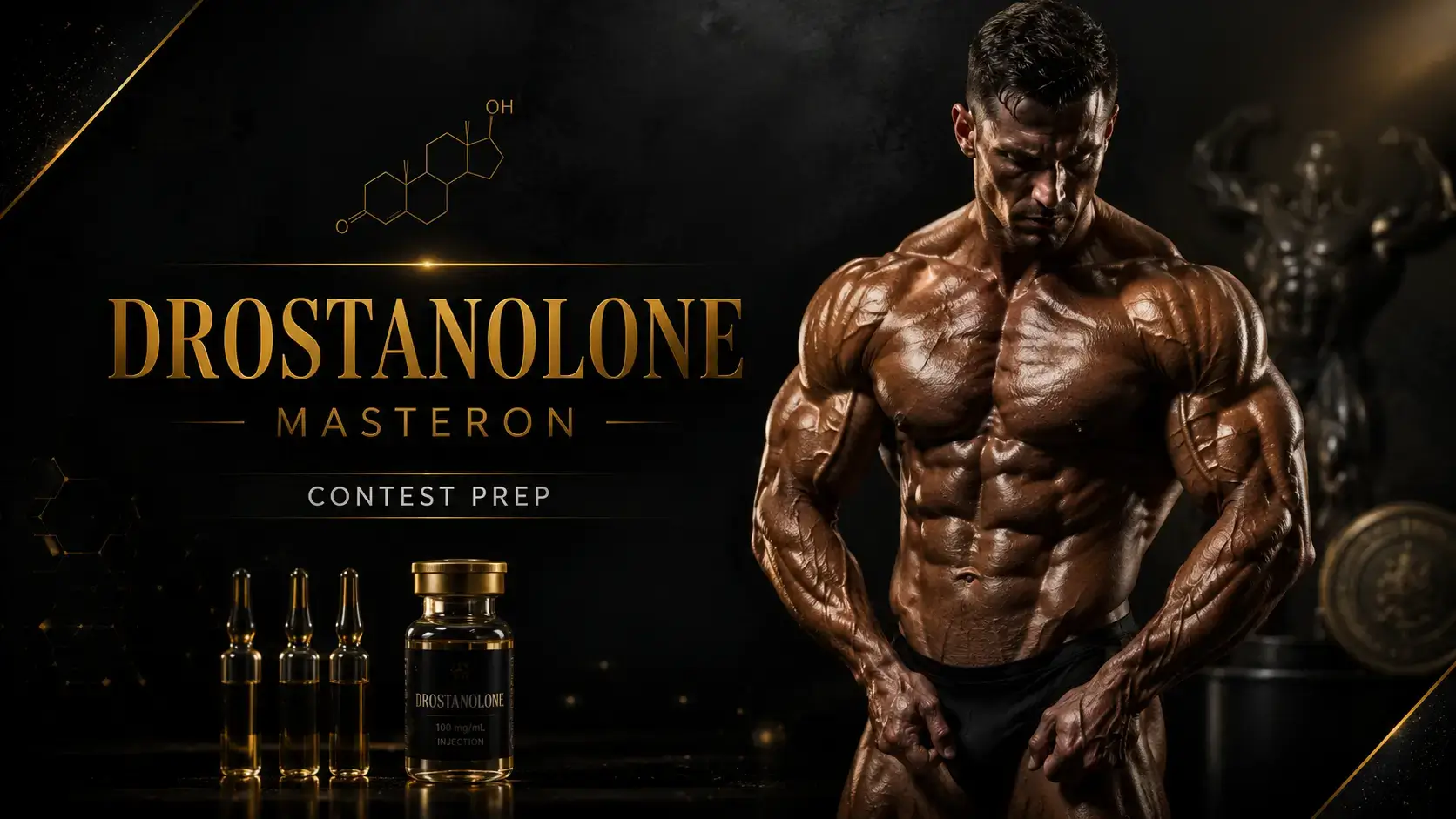
Modern bodybuilding focuses not only on gaining muscle mass but also on the visual quality of the physique. At a certain stage of preparation, athletes aim to emphasise muscular detail, preserve muscle density during a calorie deficit and reduce the influence of factors that visually soften definition.
Different anabolic-androgenic compounds are used for such purposes in the athletic community. One of the best-known substances in this group is Drostanolone, also known as Masteron.
Drostanolone is generally viewed not as a primary compound for rapidly increasing total body weight, but as a tool for stages when a muscular foundation has already been developed and the main objective is to improve the visual quality of the physique. Its expected effects are most noticeable at a relatively low level of subcutaneous body fat, with a properly structured diet and a consistent training routine.
It is important to understand that Drostanolone does not burn fat by itself, is not a diuretic and cannot compensate for mistakes in nutrition or preparation. Its popularity is primarily associated with its androgenic profile and lack of aromatisation rather than with any guaranteed ability to create a contest-ready physique.
Drostanolone (Masteron) in bodybuilding: characteristics and use of the compound
Drostanolone is a synthetic anabolic-androgenic steroid derived from dihydrotestosterone. The substance was originally used in medical practice but later became widespread in bodybuilding and strength sports.
Within the athletic community, Masteron is most commonly used during cutting phases, body recomposition and the final stages of contest preparation. It is less frequently selected as a primary compound for significant mass gain because it is not generally associated with a rapid increase in total body weight or pronounced fluid retention.
Drostanolone does not aromatise into oestrogens. This property largely defines how the compound is positioned in sport: the absence of oestrogen-dependent water retention may make it easier to assess the physique visually compared with compounds that can aromatise extensively.
However, the absence of aromatisation does not mean that adverse effects are absent. Drostanolone remains a systemically active androgenic compound and may affect natural testosterone production, the lipid profile, cardiovascular health and the development of androgenic reactions.
For this reason, it is generally regarded in bodybuilding as a specialised compound for experienced athletes who already have an established muscular foundation and understand the limitations of sports pharmacology.
How Drostanolone works: its influence on physique, muscle density and visual quality
Drostanolone works through its interaction with androgen receptors. Like other anabolic-androgenic steroids, it can influence protein metabolism, the preservation of lean mass and the body’s adaptation to physical stress.
However, terms such as muscle “hardness”, “density” and “dryness” primarily describe the visual appearance of the physique rather than a separate, measurable physiological effect of the compound. An athlete’s appearance is simultaneously influenced by:
- the percentage of subcutaneous body fat;
- the amount of intramuscular glycogen;
- fluid and sodium levels;
- carbohydrate loading;
- skin condition;
- stress and sleep quality;
- other compounds included in the preparation programme.
Drostanolone does not transform a soft physique into a contest-ready one by itself. If body-fat levels remain high, visible muscular detail will remain limited regardless of the pharmacology being used.
Its visual effect is usually associated with the absence of aromatisation and a lower tendency towards oestrogen-dependent water retention. This may allow already-developed musculature to appear more clearly defined. However, the compound does not directly remove water and cannot replace control over diet, sodium or carbohydrate intake.
In athletic practice, Drostanolone is also credited with the ability to lower SHBG, or sex hormone-binding globulin. In theory, reduced SHBG may increase the proportion of free testosterone and other androgens during combined cycles. However, the strength of this effect varies between individuals, and reliable clinical data specifically concerning Drostanolone remain limited. It should therefore not be regarded as a guaranteed method of increasing free testosterone.
For this reason, Drostanolone is generally viewed as a compound for the final refinement of the physique rather than the foundation of an entire muscle-gain or weight-loss programme.
Drostanolone during cutting: preserving muscle mass and reducing the influence of water retention
Cutting is one of the most demanding stages of preparation. An athlete must reduce fat mass while preserving muscle size, training performance and an acceptable sense of well-being.
During a prolonged calorie deficit, the risk of declining strength and losing part of the lean body mass increases. In athletic practice, Drostanolone is regarded as one of the compounds that may support an androgenic environment and the preservation of muscle tissue under restricted calorie intake.
However, two separate processes must be distinguished. Fat mass decreases because of a sustained energy deficit, whereas anabolic compounds may primarily influence the preservation of muscle tissue. Drostanolone does not replace a diet and does not produce fat loss without control over calorie intake.
Another reason for its popularity during cutting is the absence of aromatisation. The compound is not usually associated with pronounced oestrogen-dependent fluid retention. As a result, changes in the physique may be easier to evaluate when the diet has been properly structured.
Masteron is not a diuretic, however. It does not guarantee the absence of oedema and does not remove water retention caused by:
- excessive sodium intake;
- fluctuations in carbohydrate intake;
- stress;
- insufficient sleep;
- medical conditions;
- the effects of other compounds.
If the calorie deficit is too aggressive and the training load exceeds the body’s ability to recover, Drostanolone will also be unable to prevent all losses in strength and muscle mass.
Drostanolone for muscle definition: why it is used to improve muscular detail
Pronounced definition appears primarily when a muscular foundation has already been developed and the layer of subcutaneous fat is sufficiently low. Using Drostanolone without first improving body composition therefore rarely produces a clearly visible result.
Within the athletic community, the compound is used to emphasise a physique that has already been achieved. It is associated with a denser and more compact muscular appearance, particularly around the shoulders, chest, back and legs.
The degree of visual change varies considerably between athletes. Genetics, skin thickness, fat distribution, muscle size and the overall preparation programme all influence the result.
It should be understood that Drostanolone:
- does not build muscle without a training stimulus;
- does not create definition at a high body-fat percentage;
- does not remove localised fat deposits;
- does not replace a calorie deficit;
- does not guarantee a stage-ready physique.
The phrase “Drostanolone for definition” therefore reflects the compound’s positioning in sport rather than an independent fat-burning effect. It may emphasise a result that already exists, but it does not create that result from nothing.
Drostanolone for physique control: use during contest preparation
During the final stage of preparation, athletes attempt to minimise sudden changes in their appearance. Total body weight is not the only important factor: muscle fullness, skin condition, visible definition and the stability of the physique throughout the week also become significant.
In this context, Drostanolone is valued for its lack of aromatisation and its comparatively understandable influence on the visual profile. It may be easier for an athlete to assess changes in appearance when a compound does not cause pronounced oestrogen-dependent fluid retention.
Physique control is not determined by pharmacology alone, however. It is influenced by:
- average weekly body weight;
- changes in body measurements;
- the level of subcutaneous body fat;
- carbohydrate and sodium intake;
- recovery after training;
- sleep quality;
- stress;
- digestive health.
Masteron does not make the preparation process completely predictable. Different athletes may respond differently even when following the same protocol. Visual changes may also result from adjustments to nutrition, fluid intake or training load rather than from the compound itself.
Drostanolone is therefore regarded as one element of a complete preparation system rather than as an independent tool for controlling the physique.
Drostanolone esters: propionate and enanthate, their differences and characteristics
The best-known forms of the compound are Drostanolone Propionate and Drostanolone Enanthate. Both forms contain the same active compound but differ in their release rate and duration of action.
Drostanolone Propionate is a short ester. It is released more quickly after administration and leaves the body more rapidly after discontinuation. In athletic practice, it is more commonly chosen for shorter cycles and the final stages of preparation, when the athlete wants to assess the body’s response sooner and adjust the programme more quickly.
The main practical disadvantage of propionate is the need for more frequent administration. This increases the number of injections and may raise the likelihood of local irritation.
Drostanolone Enanthate has a longer duration of action. It allows longer intervals between administrations and is more convenient for extended programmes. However, enanthate takes longer to reach a stable concentration and remains in the body for longer after use is discontinued.
The main differences can be summarised according to several parameters:
- the release rate of the active compound;
- the frequency of administration;
- the time required to reach a stable concentration;
- the rate at which levels decline after discontinuation;
- the flexibility of programme adjustments.
The ester does not alter the fundamental properties of Drostanolone itself. At a comparable level of exposure, the expected effects are produced by the same active compound, although the speed at which changes appear and the ease of managing the cycle differ.
The choice between propionate and enanthate generally depends on the duration of preparation, the injection schedule and the need to respond quickly to possible adverse effects.
Drostanolone before a contest: its role in achieving a competitive physique
Drostanolone is frequently mentioned in the context of contest preparation because of its positioning in sport as a compound for muscular density, dryness and visual definition.
In practice, it is used during the final part of preparation, when the athlete has already reduced body-fat levels and is attempting to preserve muscle size during a calorie deficit. Under these conditions, the absence of aromatisation may be particularly relevant when assessing the physique visually.
Drostanolone does not guarantee an ideal appearance on the day of competition, however. The final result depends on the entire preparation process:
- the duration and severity of the calorie deficit;
- the preservation of muscle mass;
- the carbohydrate strategy;
- the management of fluid and sodium;
- the quality of posing;
- skin condition;
- recovery and sleep.
Mistakes during the final week can completely outweigh the expected effect of the compound. Excessive water restriction, uncontrolled use of diuretics and abrupt changes in carbohydrate intake or training load may worsen the physique and create serious health risks.
Anti-doping restrictions must also be considered separately. Drostanolone is classified as an anabolic agent and is prohibited in drug-tested sport both in and out of competition. Its use may result in a positive test and the disqualification of the athlete.
The statement that Drostanolone is a universal compound “for contests” is therefore applicable only to unregulated bodybuilding environments. Its use is not permitted for athletes competing under the rules of anti-doping organisations.
Potential risks and health monitoring
The absence of aromatisation is sometimes mistakenly interpreted as an indication of low risk. In reality, Drostanolone retains the systemic effects typically associated with anabolic-androgenic steroids.
Potential risks include:
- suppression of natural testosterone production;
- deterioration of the lipid profile;
- increased cardiovascular strain;
- acne and increased skin oiliness;
- accelerated hair loss in individuals with a genetic predisposition;
- effects on the prostate;
- disruption of spermatogenesis and fertility;
- changes in mood and sleep;
- local complications following injections.
In women, androgenic compounds are associated with a risk of virilisation, and some of these changes may be irreversible.
Assessing the body’s condition based only on subjective well-being is insufficient. In a medical context, attention is usually given to blood pressure, a complete blood count, the lipid profile, liver markers and hormonal status.
Laboratory monitoring does not make non-medical use safe. It may allow changes to be identified earlier, but it cannot eliminate the possibility of long-term consequences.
Conclusion
Drostanolone occupies a distinct place in sports pharmacology because it is derived from dihydrotestosterone, does not aromatise and is positioned as a compound for controlling the visual quality of the physique.
In bodybuilding, it is most commonly considered:
- during a cutting phase;
- for preserving muscle mass during a calorie deficit;
- when working on muscular detail;
- during the final stage of contest preparation;
- in programmes where pronounced oestrogen-dependent water retention is undesirable.
The compound does not burn fat, is not a diuretic and does not create visible definition when body-fat levels remain high. Its expected visual effect depends on the athlete’s starting condition, nutrition, training, recovery and the other elements of preparation.
Propionate and enanthate differ in release rate and the practical organisation of the cycle but contain the same active compound. Choosing a particular ester does not eliminate the risks associated with androgenic and anabolic activity.
Drostanolone may suppress natural hormonal function, worsen the lipid profile and cause other systemic adverse effects. It is classified as a prohibited anabolic agent for athletes subject to drug testing.
Masteron should therefore be viewed not as a guarantee of a contest-ready physique but as one of the tools used in certain areas of bodybuilding. The foundation of the result remains a properly calculated diet, a consistent training programme, sufficient recovery and a responsible approach to health.