Deutsch
 English
 Français
 Español
 Italiano
 Svenska
 Čeština
 Nederlands
 Русский
 Українська
 Polski


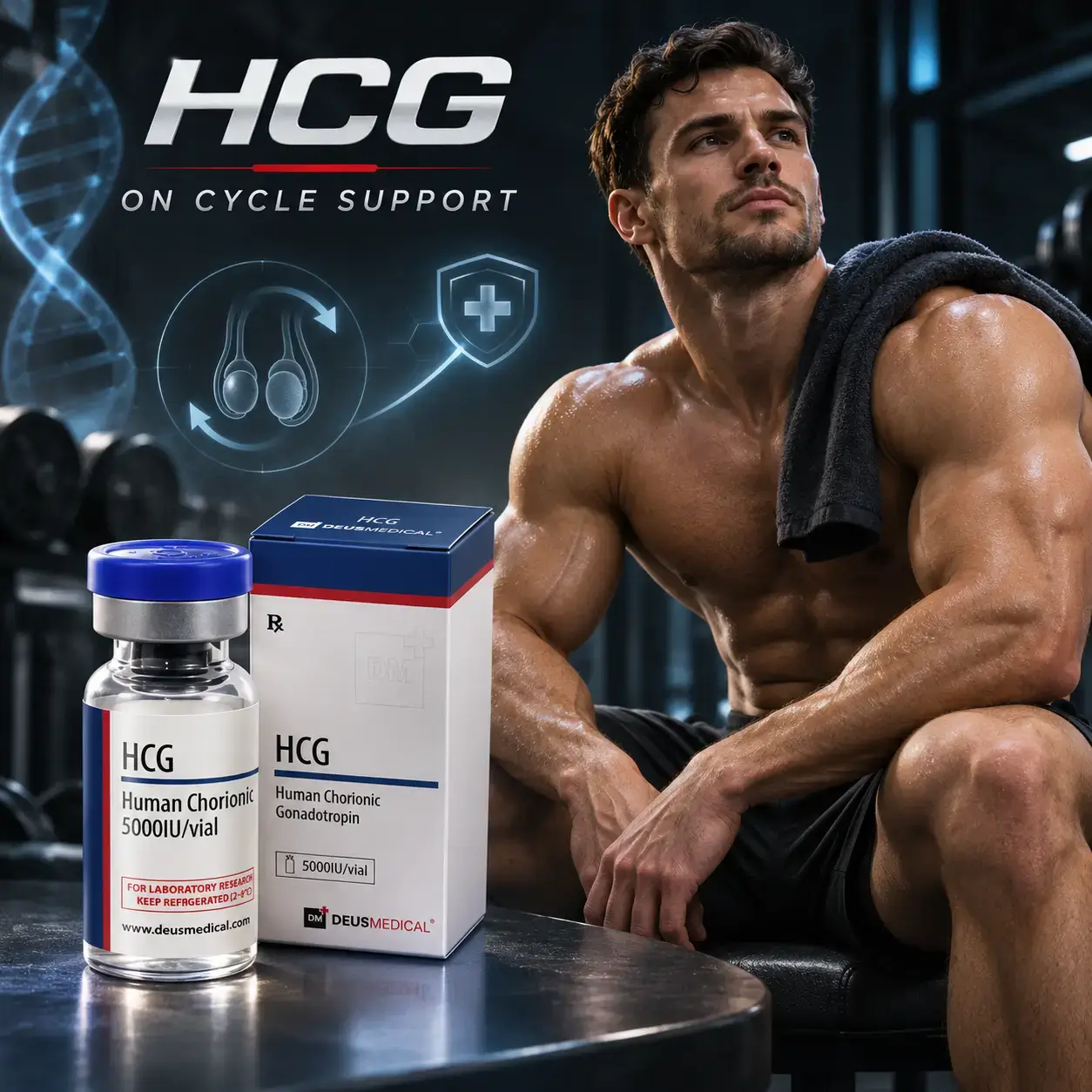
Human Chorionic Gonadotropin (HCG) is used in bodybuilding primarily to help maintain testicular function when the body’s own hormonal axis is suppressed by anabolic steroids.
HCG acts directly on the testes by mimicking the signal of LH. It helps maintain or stimulate their function, but by itself it does not restore pituitary function.
This leads to two main scenarios of use: small regular amounts during a cycle, or a more intensive short phase after prolonged suppression before moving on to recovery therapy.
How HCG works: LH, Testosterone and testicular function
Under normal conditions, the pituitary gland releases LH, which binds to receptors on Leydig cells and stimulates the production of Testosterone inside the testes. This intratesticular Testosterone is important not only for the overall hormonal environment, but also for normal reproductive function.
During a cycle of anabolic steroids, the body receives a large amount of androgens from external sources. The hypothalamus and pituitary respond by reducing their own secretion of LH and FSH, so the testes gradually lose the stimulating signal they normally receive.
HCG binds to the same receptor as LH and continues to stimulate Leydig cells even when the central hormonal axis is suppressed. In other words, it temporarily replaces the action of LH at the level of the testes, but it does not make the pituitary gland start producing gonadotropins independently again.
HCG during a steroid cycle: what purpose does it serve?
If HCG is used directly during a cycle, the goal is not to maximize the body’s own Testosterone production. The purpose is to avoid leaving the testes completely without an LH signal for many weeks or months.
In sports practice, 250–500 IU twice per week is commonly used. Small regular administrations are used as a supportive approach throughout the cycle.
This approach may help:
- reduce the severity of testicular atrophy;
- support intratesticular Testosterone production;
- preserve a better functional response of the testes after the cycle;
- partially maintain the conditions required for spermatogenesis.
At the same time, HCG does not guarantee preservation of fertility. FSH is also important for normal spermatogenesis, and prolonged AAS cycles may affect several parts of the reproductive system at the same time.
HCG after a cycle: how it is used before recovery
If HCG was not used during a prolonged cycle, the testes may remain without a normal LH signal for a considerable period after the cycle ends. In sports practice, HCG is sometimes used in this situation as a short separate phase before the main PCT.
A commonly used range is around 1000–2500 IU every other day for 2–3 weeks. The purpose here is no longer to maintain function throughout the cycle, but to stimulate the testes more actively after prolonged suppression.
A higher amount does not automatically mean better recovery. HCG can significantly increase Testosterone production inside the testes, and Estradiol may increase along with it. For this reason, the result should not be assessed only by subjective well-being.
After HCG is discontinued, it becomes more useful to evaluate how well LH, FSH and endogenous Testosterone production return on their own. This stage provides more meaningful information about the actual recovery of the hormonal axis.
HCG and PCT: why these are different stages
HCG and SERM compounds serve different purposes. HCG is used to stimulate the testes, while Tamoxifen or Clomiphene are used at the stage when the body’s own hormonal signaling is being restored.
For this reason, a high Testosterone level while using HCG does not mean that endogenous LH and FSH production has already recovered. To assess recovery, it is more important to look at what happens after external stimulation is stopped.
HCG products from Deus Medical and Astera Labs
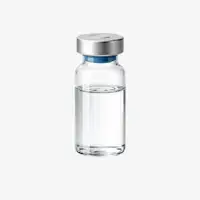
Dinespower offers two HCG options with the same amount of active ingredient — 5000 IU per vial.
HCG from Deus Medical contains 5000 IU of human chorionic gonadotropin in lyophilized powder form.

HCG from Astera Labs also contains 5000 IU of human chorionic gonadotropin in lyophilized powder form.
In terms of active ingredient quantity, both options are comparable. This amount is convenient both for small regular administrations during a cycle and for shorter protocols afterward. The choice therefore mainly depends on brand preference.
How long does a 5000 IU vial last?
With a supportive protocol, HCG consumption is relatively low. If 250 IU is used twice per week, weekly consumption is 500 IU, so 5000 IU lasts for approximately 10 weeks. At 500 IU twice per week, consumption is 1000 IU per week, which is approximately 5 weeks.
This is only a calculation of the amount of active ingredient used. Whether one reconstituted vial can actually be used over that entire period depends on the storage duration specified by the manufacturer for the specific product and the diluent being used.
Reconstitution, storage and administration
HCG is supplied as a lyophilized powder and is reconstituted with bacteriostatic water before use. After reconstitution, the solution is stored in the refrigerator and should not be frozen.
In sports practice, the product is usually administered subcutaneously, often in the abdominal area. Dosage is calculated in IU, so before reconstitution it is important to understand the final concentration of the solution.
For example, if a 5000 IU vial is reconstituted with 2 ml of liquid, the concentration will be 2500 IU per 1 ml. The larger the volume of diluent, the fewer IU are contained in the same volume of solution.
When handling a reconstituted product, sterility and proper storage are important. The solution should not be exposed to heat, freezing or vigorous shaking.
HCG and Estradiol: why E2 may increase after adding the compound
HCG can increase not only Testosterone but also Estradiol. Stimulation of Leydig cells increases the amount of Testosterone directly inside the testes, where some of the hormone may be aromatized.
For this reason, the situation may change even if the dosage of the main Testosterone used during the cycle remains unchanged. After adding HCG, some men may experience additional water retention, breast tenderness or other signs of more pronounced estrogenic activity.
This is especially important to consider with higher amounts used after a cycle, when stimulation of the testes is much stronger than with a supportive approach.
Anastrozole should not be automatically increased simply because HCG has been added. It is more useful to evaluate symptoms together with laboratory Estradiol levels.
HCG and male fertility
A high level of Testosterone directly inside the testes is required for spermatogenesis. HCG can help maintain this even when endogenous LH is suppressed.
For this reason, the compound is used for more than simply preserving testicular size. For men who want to preserve or restore reproductive function, maintaining intratesticular Testosterone is considerably more important.
However, HCG does not replace the entire gonadotropin system. It mainly mimics the action of LH, while FSH is directly involved in Sertoli cell function and spermatogenesis. Therefore, normal testicular size or a good Testosterone level does not prove that sperm quality is normal.
If fertility is a separate goal, it makes sense to evaluate not only Testosterone, LH, FSH and Estradiol, but also a semen analysis. In medical practice, additional gonadotropins, including FSH preparations or hMG, may be used when spermatogenesis is significantly impaired.
Side effects and risks of HCG use
The main problems associated with HCG usually relate to excessive hormonal stimulation.
The most relevant include:
- increased Estradiol and additional water retention;
- breast tenderness or enlargement;
- changes in libido and general well-being during pronounced hormonal fluctuations;
- acne and increased skin oiliness due to higher androgenic activity;
- irritation or soreness at the site of subcutaneous administration.
High HCG amounts should not be viewed as a way to accelerate recovery proportionally. Strong stimulation may significantly increase Testosterone and Estradiol, but this does not mean that the central hormonal axis recovers faster.
Another common mistake is evaluating the result only by the return of testicular volume. External size may change faster than endogenous LH, FSH and stable Testosterone production recover without external stimulation.
HCG during a cycle, after a cycle and during PCT: what is the difference?
| Stage | Main purpose | Common sports approach | What to keep in mind |
| During the cycle | Support testicular function while LH and FSH are suppressed | 250–500 IU twice per week | Small regular amounts are used rather than maximum stimulation |
| After a prolonged cycle | Stimulate the testes more actively before the recovery phase | 1000–2500 IU every other day for approximately 2–3 weeks | The Testosterone and Estradiol response may be considerably stronger |
| PCT | Restore endogenous hormonal signaling | HCG is usually discontinued and a SERM is used instead | Recovery should be evaluated without external stimulation of the testes |
If these differences are reduced to one simple principle, HCG is used during a cycle to support testicular function, after prolonged suppression for more active short-term stimulation, and during the PCT stage the main objective shifts toward restoring the body’s own hormonal signaling. For this reason, the same approach to HCG should not be used across all three stages.
Main conclusions about HCG use in bodybuilding
HCG is used in bodybuilding primarily to preserve or restore testicular function against the background of suppression caused by anabolic steroids.
During a cycle, it is used as a supportive tool, while after prolonged suppression it may be used as a short stage before recovery therapy. These scenarios differ both in their purpose and in the intensity of stimulation.
An additional value of HCG lies in supporting intratesticular Testosterone and the conditions required for spermatogenesis. However, a normal Testosterone level or preserved testicular volume does not guarantee preserved fertility.
The result of HCG use is better evaluated using a combination of markers: Testosterone, Estradiol, LH, FSH and, when reproductive function matters, a semen analysis. This provides a more useful picture than relying only on testicular size or subjective well-being.