Deutsch
 English
 Français
 Español
 Italiano
 Svenska
 Čeština
 Nederlands
 Русский
 Українська
 Polski


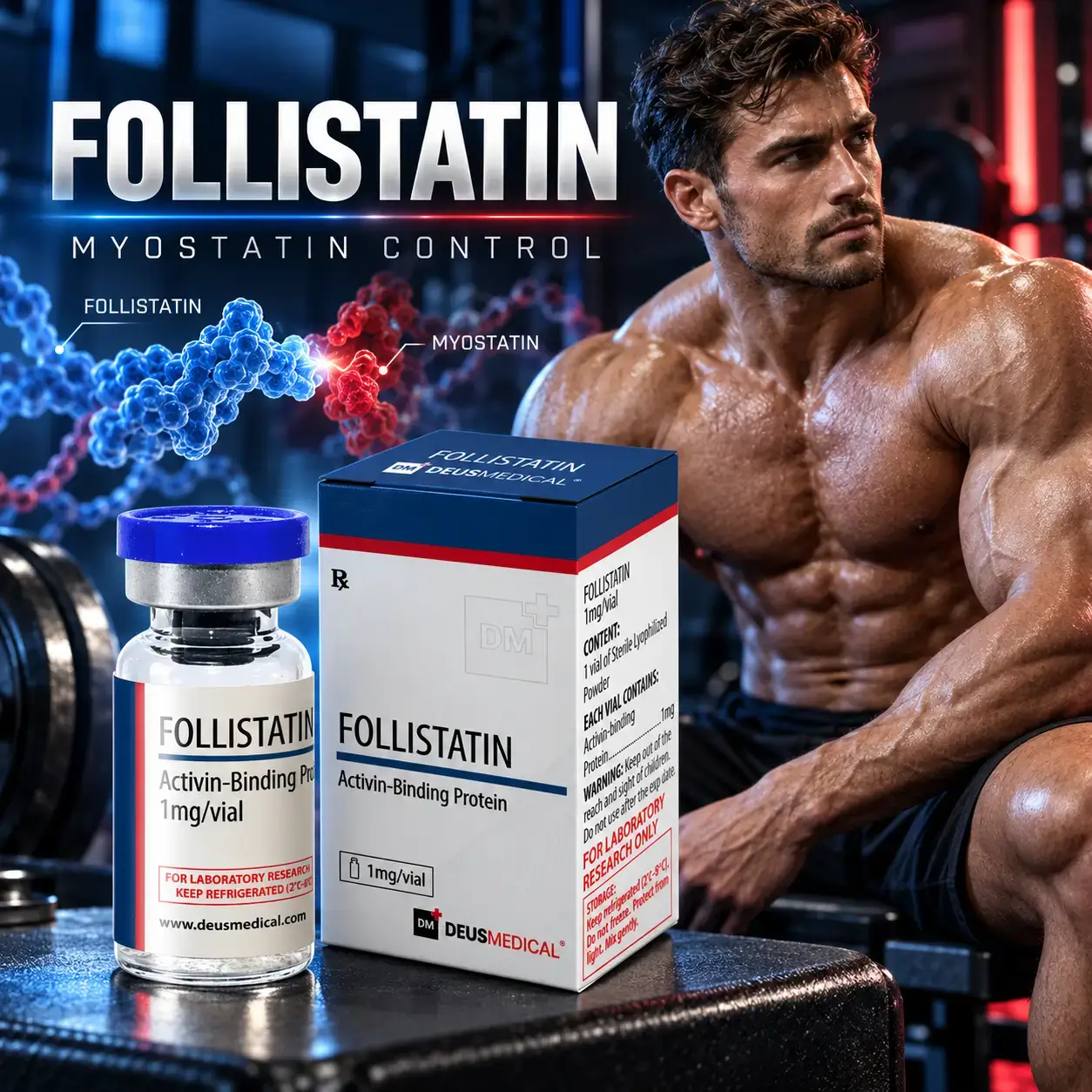
Follistatin is of interest in bodybuilding because of its ability to bind myostatin, a protein involved in limiting the growth of muscle tissue. This is exactly why products such as Follistatin 344 have attracted considerable expectations regarding faster muscle gain.
At the same time, the effectiveness of a specific injectable Follistatin product used subcutaneously for a short period in healthy athletes has not been established. The mechanism of myostatin suppression is indeed linked to muscle growth, but this does not mean that a commercial product supplied in a vial will produce the same results seen in genetic models or studies using other delivery methods.
In practice, Follistatin is usually viewed as an experimental component of a bulking protocol, where the expectation is not a sudden jump in body weight but a possible influence on the rate of muscle tissue growth.
How Follistatin works: myostatin, activin and muscle growth
Myostatin is one of the signals that limits excessive growth of skeletal muscle. When its activity is reduced, the potential ceiling for muscle hypertrophy may also shift.
Follistatin binds myostatin and reduces its availability to receptors. This is the main reason for the interest in Follistatin in bodybuilding.
However, the activity of Follistatin is not limited to myostatin alone. It also interacts with activin and other closely related signaling proteins. For this reason, it should not be viewed as an exclusively targeted “muscle growth brake blocker.”
For an athlete, the important point is that the mechanism is genuinely connected with the regulation of muscle mass, but the effects of the compound may potentially extend beyond skeletal muscle alone.
Follistatin for muscle growth: what can realistically be expected?
Follistatin is not the type of compound from which users normally expect a rapid increase in body weight caused by water, glycogen or a sudden rise in strength.
If an effect does occur, it makes more sense to look for it in a potentially faster rate of muscle gain under conditions that are already suitable for growth: a calorie surplus, sufficient protein intake, progressive training and adequate recovery.
For this reason, assessing the result by asking “how many kilograms did I gain in 10 days?” makes little sense. A short period of use should not automatically be treated as a timeframe in which an athlete must achieve an obvious visual transformation.
Follistatin is primarily of interest to experienced athletes who already understand their normal rate of mass gain and can compare it with the period during which the compound is used.
How Follistatin is used: a protocol based on Follistatin by Deus Medical
In the sports community, Follistatin 344 is usually used for short periods. One of the most common approaches is around 100 mcg per day for 10 days, followed by a longer break.
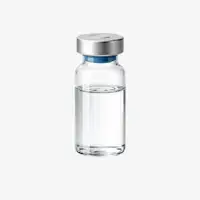
This approach conveniently matches the format of Follistatin by Deus Medical. One vial contains 1 mg, or 1000 mcg, of the compound. When used at 100 mcg per day, this amount lasts for ten days. The product comes as a lyophilized powder. Before use, it is reconstituted with bacteriostatic water, and the prepared solution is stored in the refrigerator while avoiding heating, freezing and vigorous shaking. When reconstituting peptide products, users generally try to avoid exposing the solution to strong mechanical stress. The diluent is added carefully, after which the contents are mixed with gentle movements of the vial.
In sports practice, Follistatin is more commonly injected subcutaneously once per day. The 100 mcg × 10-day protocol is a common user approach rather than a standard that is equally suitable for everyone.
Systemic or local injection
Recommendations can sometimes be found to inject Follistatin directly near a lagging muscle group, such as the biceps or deltoid, in the hope of accelerating growth specifically in that area.
There is no convincing basis for considering a local injection more effective. Once Follistatin enters the bloodstream, it acts systemically, so the injection site does not turn it into a method for selectively increasing the size of a specific muscle group.
Local intramuscular injections also introduce their own risks of tissue irritation and inflammation. For this reason, the injection site should not be confused with the site of action of the compound.
Does it make sense to time the injection around training?
Sports sources sometimes recommend injecting Follistatin in the morning on an empty stomach or immediately after training. However, there is no convincing evidence that a specific time of day significantly improves the result.
If a daily protocol is used, maintaining a consistent routine is more important than trying to identify an exact timing window relative to meals or training.
Why Follistatin is usually used for short periods
Ten-day protocols have long become established in sports practice, but 10 days should not be interpreted as a precise physiological limit of effectiveness.
Claims can sometimes be found that after 12–14 days the body begins producing neutralizing antibodies and the compound almost completely stops working. For injectable Follistatin in humans, such a precise pattern has not been reliably confirmed.
Short protocols are more likely to reflect the experimental nature of the compound, the limited information available about prolonged use and established user practice. For the same reason, a specific break between cycles cannot be regarded as a scientifically established “reset” of sensitivity.
What Follistatin is combined with
Follistatin is most often added on top of an already functioning bulking cycle rather than used instead of its main components.
Follistatin + Testosterone
Testosterone is often used as the base component of longer bulking cycles. It provides a stable androgenic and anabolic background, while Follistatin is added for a short period with the expectation of influencing the myostatin pathway.
This combination makes more sense when viewed as the main and additional parts of the same protocol rather than as two interchangeable compounds. Testosterone Enanthate works throughout the full cycle, while Follistatin is usually used as a separate short block within it. This approach is more likely to interest experienced users who already know how they respond to Testosterone and want to assess whether the additional intervention produces a noticeable difference in muscle growth.
Follistatin + Boldenone or Nandrolone
In more pronounced bulking protocols, Boldenone or Nandrolone may be added to Testosterone. Both are long-acting injectable steroids and are used according to a completely different time frame from the short period of Follistatin use.
Boldenone Undecylenate is usually selected with the expectation of gradual mass gain and strength progression over a longer cycle. Nandrolone Decanoate is also used for gaining muscle mass, but its profile includes more pronounced progestogenic activity and its own considerations for controlling side effects.
Follistatin does not replace either Boldenone or Nandrolone in such a protocol. It is added as a separate short-term component that may potentially influence the myostatin pathway that limits muscle growth, while the main AAS compounds provide the anabolic background throughout the cycle.
Follistatin + Somatropin
Somatropin is sometimes used together with Follistatin because the two compounds affect different systems. HGH primarily influences the growth hormone and IGF-1 axis, recovery and body composition, while Follistatin is primarily associated with suppression of myostatin and activin activity.
For this reason, in a bulking protocol Somatropin may be used as a longer-term additional component, while Follistatin is used as a separate short phase. When working on body composition, HGH may also remain part of a longer protocol, whereas Follistatin should not be viewed as a substitute for it.
The fact that two different mechanisms are combined does not by itself prove strong synergy. The practical rationale behind such a combination is an attempt to influence several processes related to recovery, body composition and muscle growth at the same time.
Who may consider Follistatin?
Follistatin is difficult to describe as a sensible first choice for a beginner. If nutrition, training and the main protocol are not yet producing stable results, an experimental compound is unlikely to solve the problem.
Its use appears more logical for an experienced athlete who:
- is already gaining mass consistently in a calorie surplus;
- understands how they respond to the main compounds in the cycle;
- can compare current progress with their usual rate of development;
- is prepared for the possibility that the additional effect may be moderate.
If the goal is the most predictable possible increase in muscle mass, Follistatin remains a less predictable tool than more established anabolic compounds.
Side effects and potential risks of Follistatin
Follistatin is not an androgen. It does not aromatize and should not cause the typical AAS-related suppression of endogenous Testosterone production, so conventional PCT is usually not considered after its standalone use.
However, the absence of androgenic side effects does not mean there are no systemic risks. Follistatin also binds activin, which is involved in reproductive function and the regulation of FSH.
Local reactions are also relevant to any injectable product, including irritation, soreness, redness and inflammation. Sterility, product quality and correct storage of the prepared solution all matter.
Long-term and repeated use is a separate concern. There is not enough data in healthy athletes to confidently describe the consequences of repeated cycles.
Muscles and tendons: why training load should not be increased too quickly
Myostatin is involved in more than just the regulation of muscle mass. Experimental data suggest that substantial interference with this pathway may also affect the structure and mechanical properties of tendon tissue.
This does not mean that a short Follistatin cycle necessarily increases injury risk in humans. However, if strength or muscle size begins to increase faster than usual, it does not make sense to simultaneously accelerate progression in training weights too aggressively.
Tendons and ligaments do not adapt to loading as quickly as muscles. For this reason, a rapid increase in strength should not automatically become a reason to constantly test new maximums.
Pros and cons of Follistatin for bodybuilding
| Advantages | Limitations |
| It is not an androgen | Results are less predictable than with established bulking compounds |
| Does not require conventional PCT | Affects not only myostatin but also activin |
| Used for short periods | The optimal duration of use has not been established |
| A 1 mg vial matches the common 100 mcg × 10-day protocol | Long-term use is poorly studied |
| Does not produce the typical aromatization associated with AAS | Does not replace the basic conditions required for muscle gain |
Follistatin before and after: how to evaluate results and reviews
Follistatin is rarely used completely on its own. A calorie surplus, heavy training and other bulking compounds are usually present at the same time.
For this reason, when evaluating personal results, it is more useful to compare current progress with one’s normal rate of development. Muscle measurements, strength levels and changes in body weight under comparable conditions can all be monitored.
If several bulking compounds are being used at the same time, it is practically impossible to determine the exact contribution of Follistatin. Therefore, reviews in the format “I added FS344 and gained several kilograms of muscle” do not prove much by themselves.
The same applies to photos of animals or people with genetically impaired myostatin function. Such examples demonstrate the importance of the myostatin pathway itself, but they do not show the result of a short cycle of injectable Follistatin.
What the research shows and how relevant it is to bodybuilding
The myostatin pathway genuinely influences the amount of muscle tissue. When it is strongly suppressed genetically, animal models show very pronounced muscle hypertrophy.
Follistatin can also affect this process, but the most noticeable results have been obtained under conditions that differ substantially from ordinary sports use.
In particular, studies have used gene-based delivery of Follistatin, where cells continue producing the required protein over an extended period. This is fundamentally different from a short cycle of ready-made FS344 from a vial.
For this reason, the research on myostatin explains well why interest in the compound developed, but the results cannot be directly transferred to a standard ten-day cycle of injectable Follistatin.
Main conclusions: does Follistatin work for muscle growth?
Follistatin affects the myostatin pathway, which is genuinely involved in limiting the growth of muscle tissue. This is exactly why the compound is of interest in bodybuilding.
However, for standard injectable use in healthy athletes, it cannot be stated with confidence that a short cycle of 100 mcg per day will produce a noticeable increase in muscle mass. This protocol is common in the sports community, but it is based mainly on user practice rather than a confirmed result in bodybuilders.
For this reason, the potential use of Follistatin is better viewed as an experimental addition for experienced athletes who already have their nutrition, training and main bulking cycle well established. It should not be considered a standalone or predictable tool for gaining muscle.
If the compound is used, it makes more sense to evaluate it specifically as an additional experiment: without expectations of a sudden jump in body weight, without attempts to “grow” a specific muscle locally and without assuming that a ten-day protocol will necessarily produce a noticeable result.