Deutsch
 English
 Français
 Español
 Italiano
 Svenska
 Čeština
 Nederlands
 Русский
 Українська
 Polski



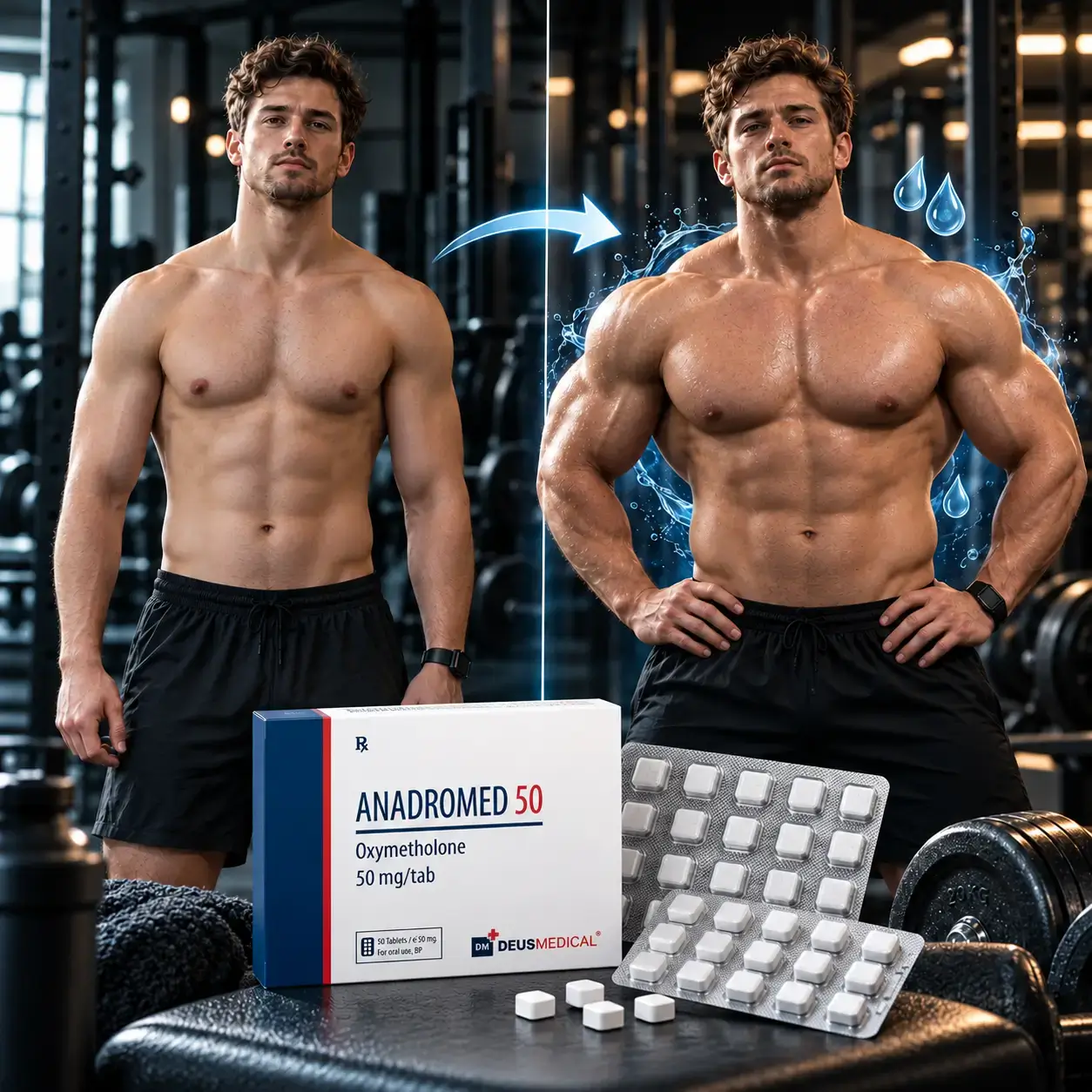
Oxymetholone, also known as Anadrol, is a powerful oral anabolic-androgenic steroid (AAS). In bodybuilding, it is most commonly used during bulking phases when rapid increases in overall body weight, muscle size and strength are important.
It is a 17-alpha-alkylated compound, which allows it to remain active when taken orally, but also makes liver health and the lipid profile particularly important considerations. From a bodybuilding perspective, Oxymetholone is best suited to goals where gaining body weight is not a problem.
For mass gain and absolute strength, this can be an advantage. If the athlete instead prioritizes a dry visual look or must remain within a strict weight class, pronounced weight gain and water retention become less convenient.
Main effects of Oxymetholone: strength, muscle size and body weight
The main effects of the compound can be divided into three areas: strength, muscle size and overall body weight.
Strength can increase relatively quickly. This does not necessarily mean setting a new one-rep max. Sometimes an athlete simply manages more repetitions with the same working weight or is able to maintain performance for longer during heavy sets.
Body weight also increases at the same time. Muscles look fuller, measurements increase and the scale shows a noticeable rise. This is one of the main reasons Oxymetholone has developed such a strong reputation among athletes who prioritize rapid mass gain.
Results should not be judged by body weight alone. Working weights, muscle-group measurements and waist circumference provide much more information about the quality of the gain.
How much weight can you gain on Oxymetholone?
The question “How much weight can you gain?” comes up almost every time, and this is also where expectations are most often exaggerated.
Body weight can indeed rise quickly on Oxymetholone, sometimes by several kilograms over a relatively short period. But the total increase does not consist only of newly built muscle tissue.
- muscle tissue;
- glycogen stores;
- additional fluid;
- fat mass when calories are in surplus.
The quality of a bulk is better judged by combining several markers. Weight gain together with rising working weights and larger muscle measurements while the waist increases only moderately looks far better than the same increase in body weight accompanied by pronounced edema and rapid growth in waist circumference.
Oxymetholone and water retention: advantage or disadvantage?
Water retention is one of the most characteristic features of Oxymetholone. Treating it only as a disadvantage is not entirely accurate.
During a bulking phase, greater muscle fullness and a higher overall body weight can fit the goal well. In strength sports, greater body mass can also sometimes help with handling heavier loads.
The problem begins when water is mistaken for new muscle tissue. Rapid weight gain and a sharp increase in body measurements can look impressive, but after discontinuation some of the retained fluid is lost together with part of the number on the scale.
This also matters for visual assessment. The more pronounced the water retention, the harder it becomes to judge real changes in body composition.
Pronounced edema, a noticeable increase in blood pressure, shortness of breath or rapidly worsening fluid retention should no longer be treated as ordinary “fullness” during a bulk.
Oxymetholone in bodybuilding and powerlifting
Oxymetholone is used both in bodybuilding and in strength sports, but the value of the same effect differs between disciplines. A bodybuilder looks at mass, measurements and appearance, while a powerlifter prioritizes performance in the main lifts and the athlete’s weight class.
| Parameter | Bodybuilding | Powerlifting |
| Main goal | Increase body mass and muscle size | Increase strength performance |
| Weight gain | Usually acceptable during a bulk | Can be useful in an open category but problematic when there is a weight limit |
| Water retention | Adds fullness but makes it harder to assess physique quality | Appearance matters less, but extra weight can affect the weight class |
| What to track | Body weight, measurements, waist and strength | Working weights, performance in the main lifts and body weight |
For a bodybuilder, rapid weight gain is mainly useful during the off-season. In powerlifting, the same effect makes sense only while the additional body weight supports strength and does not create a problem at weigh-in.
How Oxymetholone is used: cycle, dosage and half-life
In bodybuilding circles, Oxymetholone is usually treated as a short-term component within a cycle. The most commonly discussed dosage for men is around 50 mg per day. Higher levels of around 100 mg per day are also seen among experienced users, but side effects usually increase more sharply than the additional benefit.
A typical cycle is commonly discussed in the range of 4–6 weeks. With an oral 17-alpha-alkylated compound, the liver, lipid profile and blood pressure are among the main factors limiting duration.
The oral form is usually described as having a half-life of around 8–9 hours. In sports practice, both a single daily intake and splitting a higher daily amount are used. This does not change the total amount of the drug and does not automatically reduce the burden on the body.
Before or after food?
Whether Oxymetholone is taken before or after food is far less important than the overall routine and individual tolerance. If taking it on an empty stomach causes discomfort, there is little reason to tolerate that in the hope of achieving a stronger effect.
Overall calorie surplus, protein and carbohydrate intake, training and recovery have a much greater influence on weight gain.
Oxymetholone at Dinespower: available forms and concentrations
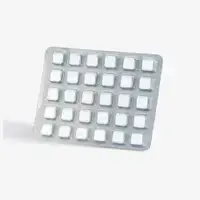
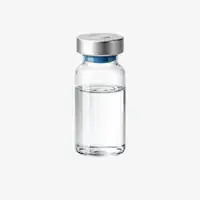
Dinespower offers two tablet versions and one injectable form of Oxymetholone. The active ingredient is the same, but the concentration and dosage form differ, so the choice depends in part on whether a larger or smaller step in active ingredient content is more convenient.
Anadromed 50 by Deus Medical is stated to contain 50 mg of Oxymetholone per tablet. This is a convenient option for those who want a high concentration of active ingredient in a single tablet: one tablet contains the amount that is commonly discussed in bodybuilding as a standard level of use.
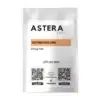
Oxymetholone by Astera Labs comes in 25 mg tablets. The lower amount per unit provides a smaller step in active ingredient quantity and can be more convenient when greater flexibility in tablet concentration is important.
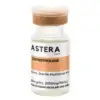
Injectable Oxymetholone by Astera Labs is stated to have a concentration of 50 mg/ml. Its main difference is the route of administration itself: it is intended for users considering Oxymetholone as an injectable rather than as tablets. It is important to note that the specifics of oral use cannot automatically be applied to the injectable form.
What is Oxymetholone combined with?
Oxymetholone is often used not as the foundation of the entire cycle, but as a short-term component within a longer setup. The choice of other compounds depends on which goal needs to be emphasized.
If the goal is mass gain
In bulking cycles, Oxymetholone is often considered alongside Testosterone Enanthate or Testosterone Cypionate. The long ester provides a more extended foundation, while Oxymetholone is used for a faster change in body weight and strength during a specific part of the cycle.
In heavier bulking combinations, Nandrolone Decanoate and Boldenone Undecylenate may also appear. At that point, not only potential mass gain matters but also overlapping risks: blood pressure, lipid profile, hematocrit and suppression of the hormonal axis.
If strength is the main goal
In a strength-focused context, increasing body mass can sometimes be part of the strategy. Oxymetholone is also commonly discussed alongside Testosterone, but results are judged primarily by working weights and performance in the main lifts.
Testosterone Enanthate or Cypionate may be used in longer setups, while Propionate can appear in shorter ones. In powerlifting, bodyweight category adds another factor: a rapid increase on the scale may help absolute strength but can simultaneously make it harder to stay within a weight limit.
If several substances are used in the same cycle, the entire gain in strength or body mass can no longer be attributed to Oxymetholone alone. It is the result of the full combination.
Aromatization and hormonal characteristics of Oxymetholone
Oxymetholone does not aromatize through the classic pathway. In other words, it is not converted by aromatase into estradiol in the same way as Testosterone.
At the same time, the drug is known for water retention and other effects that may outwardly resemble estrogenic activity. Strong water retention by itself does not therefore mean that aromatization is high.
The mechanism is more complex, which is why automatically treating an aromatase inhibitor as the solution to every issue involving water retention or breast tissue is incorrect.
The absence of aromatization also does not protect against suppression of endogenous Testosterone production.
Side effects and what should be monitored
Some side effects can be noticed without bloodwork: edema, acne, headaches, digestive problems and changes in libido or general well-being.
Other changes may remain unnoticed for a long time. With Oxymetholone, the liver, lipid profile and blood pressure are especially important. The drug can reduce HDL and increase LDL, while its 17-alpha-alkylated structure makes liver monitoring particularly relevant.
During use, attention is commonly paid to:
- ALT, AST and other liver markers;
- lipid profile;
- blood pressure;
- complete blood count;
- hormonal profile in the context of the other compounds in the cycle.
Pronounced edema, a major increase in blood pressure, yellowing of the skin or eyes, dark urine, pain in the right upper abdomen or severe worsening of general well-being require medical assessment rather than simply waiting a few more days.
Oxymetholone for women
For women, Oxymetholone is one of the more problematic AAS because of its pronounced androgenic effects and the risk of virilization.
Possible changes include deepening of the voice, increased facial and body hair growth, acne, menstrual irregularities, clitoral enlargement and androgen-related hair loss. Some of these changes may persist after discontinuation.
Experience with Oxandrolone should not automatically be applied to Oxymetholone simply because both drugs are available as tablets. Their androgenic profiles differ considerably.
Androgenic drugs are contraindicated during pregnancy because of the risk to fetal development.
PCT and recovery after an Oxymetholone cycle
Oxymetholone suppresses endogenous Testosterone production, so after discontinuation both subjective well-being and recovery of the hormonal axis matter.
If lower libido, poorer erectile function, pronounced fatigue or a noticeable drop in performance appear after the cycle, total Testosterone alone does not provide the full picture. Depending on the situation, LH, FSH and other markers may also be assessed.
Enclomiphene, Tamoxifen and hCG are commonly mentioned in the context of PCT, but they are different drugs with different mechanisms of action. If Oxymetholone was used together with other AAS, recovery should be assessed in the context of the full cycle rather than one compound alone.
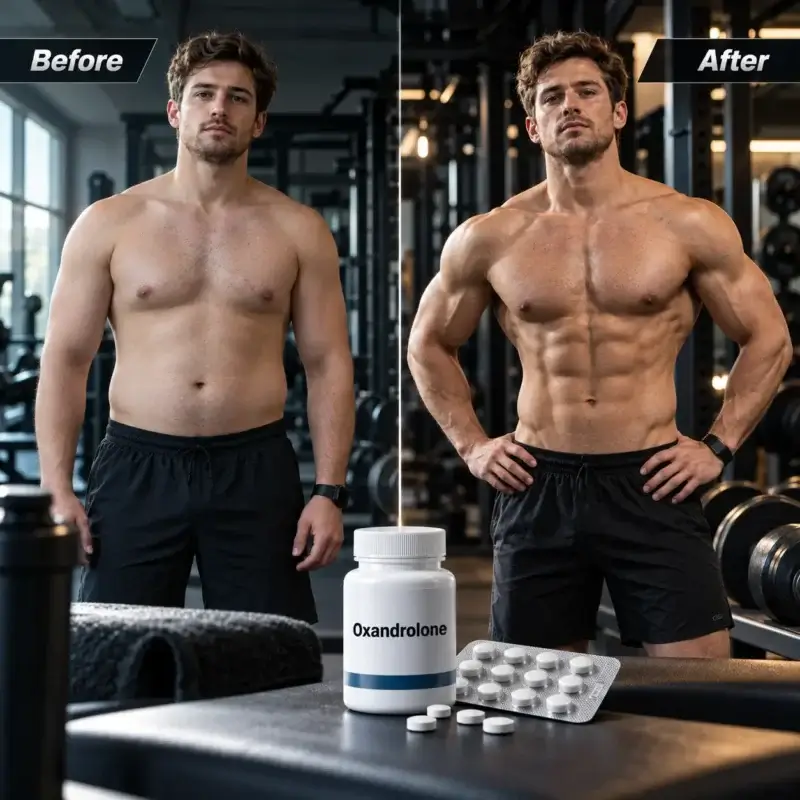
Oxymetholone before and after: how to assess the real result
When judging results, it is more useful to compare your own progress over time than to rely on other people’s “before and after” photos from the internet.
Body weight is best measured in the morning, after using the bathroom and before eating, while the average over several days is more useful than a single measurement. Waist and other circumferences should be measured at the same point with the same tape tension. Photos are best taken under the same lighting, in the same body position and without a training pump.
During a bulk, four basic markers are enough to provide a useful picture: total body weight, waist circumference, muscle-group measurements and working weights. Together, these make it much easier to understand what actually changed during the cycle.
After discontinuation, body weight may decrease somewhat as water retention and muscle fullness decline. It is much more useful to look at which strength levels and measurements remain once body weight has stabilized.
Key takeaways: who Oxymetholone suits and what to expect
Oxymetholone makes the most sense for athletes whose main priorities are rapid increases in overall body mass and strength. That is why its profile fits best with bulking phases in bodybuilding and strength-oriented goals where additional body weight is acceptable.
If the goal is mass gain, results should not be judged by the scale alone. A more useful picture is seen when working weights and muscle measurements increase at the same time, while waist growth and edema remain under control.
In powerlifting, weight gain can be useful alongside increased strength, particularly in an open category. If the athlete is restricted by a weight class, rapidly adding several kilograms can become a disadvantage.
In bodybuilding practice, around 50 mg per day and a short cycle of roughly 4–6 weeks are discussed most often. Amounts around 100 mg are also seen among experienced users, but increasing the dosage noticeably raises the burden on the liver, lipids and blood pressure without producing a proportional increase in results.
If the main priority is a dry visual look, minimal water retention or the most stable possible body weight, Oxymetholone is poorly suited to that goal. It has a fairly clear profile: rapid increases in body mass and strength are its main advantages, but many of its limitations are directly connected to those same effects.