Deutsch
 English
 Français
 Español
 Italiano
 Svenska
 Čeština
 Nederlands
 Русский
 Українська
 Polski




A prolonged cutting phase is one of the most demanding stages of physique preparation. The main goal is to reduce body fat without a noticeable loss of strength or muscle size. In practice, this becomes increasingly difficult the longer the energy deficit continues and the leaner an athlete becomes. As body fat drops, nutrition, training structure and recovery all require more careful management.
Many athletes therefore ask how to preserve muscle during a cut without losing the results of months or even years of training. A well-structured approach includes a moderate calorie deficit, sufficient protein intake, continued strength training and adequate recovery. Below, we look at why muscle mass can decline during a prolonged deficit, whether it is realistic to maintain or even build muscle while dieting, and which mistakes most often interfere with achieving the desired condition.
Why a prolonged calorie deficit can lead to muscle loss
Any calorie deficit means that the body is receiving less energy than it is expending. Under these conditions, the body increases its use of internal energy stores, primarily body fat. However, if the deficit becomes too aggressive or continues for too long, the risk of losing some lean body mass also increases.
The effect of a calorie deficit on muscle involves several changes that develop during prolonged energy restriction. Fewer resources are available for recovery, training performance may decline, and insufficient protein intake or an overly aggressive diet can increase the likelihood of losing muscle tissue.
Another factor is the body’s adaptation to weight loss. As body weight decreases, total energy expenditure also tends to fall because a lighter body requires less energy for movement and basic physiological functions.
NEAT (Non-Exercise Activity Thermogenesis) may also decrease. This includes everyday movement outside structured exercise, such as walking, household activity, changes in posture and other spontaneous physical movement. During a long deficit, increasing fatigue often causes people to move less without consciously noticing it, which can further reduce daily energy expenditure.
Metabolic adaptation also plays a role. As a cut continues, the original calorie deficit often becomes smaller and progress begins to slow. This does not mean that the metabolism is “broken”; the body is simply adapting to new conditions.
At this point, many athletes try to reduce food intake even further in order to accelerate progress. This is rarely the best solution. An excessively large deficit increases the risk of poorer recovery, declining training performance and loss of muscle mass.
Can you maintain or build muscle in a calorie deficit?
One of the most common questions is whether it is possible to build muscle while in a calorie deficit. There is no single answer, because the outcome depends on training experience, body fat level, the size of the deficit, the training program and the quality of recovery.
Beginners can sometimes gain muscle while losing fat. Because the body is not yet fully adapted to resistance training, it may be able to reduce body fat and increase muscle mass at the same time.
This type of body recomposition is also more likely in people who:
- have only recently started systematic resistance training;
- are returning to training after a long break;
- have a relatively high body fat percentage;
- previously trained or ate in a suboptimal way.
A different question is whether an experienced athlete can build a noticeable amount of muscle while in a calorie deficit. The more advanced the athlete and the lower the body fat percentage, the more difficult it becomes to lose fat while also adding a significant amount of new muscle.
For this reason, during a prolonged cutting phase the main goal for a trained athlete is usually not to gain new muscle mass, but to preserve as much existing muscle size and strength as possible.
Full-scale muscle growth during a calorie deficit is not realistic in every situation. For advanced athletes, maintaining muscle tissue and training performance while gradually reducing body fat is usually a much more realistic objective.
Training during a cutting phase: how to preserve strength and muscle mass
During a prolonged cut, many athletes make the same mistake: they sharply reduce their working weights and replace most of their resistance training with cardio. This can remove an important mechanical stimulus that helps maintain muscle tissue.
To preserve muscle and performance, several principles are worth keeping in mind:
- keep the main resistance exercises in the program;
- maintain training intensity where possible;
- control total training volume;
- do not increase cardio without limits;
- regularly assess recovery;
- keep sufficient rest days.
Resistance training maintains the mechanical stimulus that helps signal to the body that existing muscle tissue is still required, even under conditions of reduced energy availability.
It is also important to distinguish between training intensity and training volume. During a long cutting phase, it may not always be possible to maintain the same number of sets and repetitions. If recovery deteriorates, reducing total training volume slightly is often more reasonable than abandoning heavier loads altogether.
Athletes who want to preserve as much muscle as possible during a cut should therefore try to maintain sufficient muscular loading. Working weights may decline somewhat as body weight and energy availability fall, but a sudden move away from relatively heavy resistance training is usually unnecessary.
To reduce the risk of unnecessary muscle loss, it is also unwise to combine extremely low calorie intake, long daily cardio sessions and a very high volume of strength training without adequate recovery. The more aggressive the overall program becomes, the harder it is for the body to maintain recovery quality.
Nutrition during a prolonged cutting phase: protein, calories and recovery
Well-structured nutrition is just as important as training. Inadequate protein intake is one of the factors that can increase the risk of losing muscle mass.
Nutrition during a cut should include sufficient protein-rich foods, a moderate energy deficit, appropriate sources of dietary fat and enough carbohydrates to support acceptable training performance.
For most people who train regularly, a useful general target is around 1.6–2.2 g of protein per kilogram of body weight per day. At lower body fat levels and during a prolonged deficit, protein requirements may be somewhat higher, so the exact amount should be adjusted according to body weight, diet composition and training load.
Another common topic is whether a diet can support both fat loss and muscle gain. For experienced athletes, fully combining these two goals is difficult. In practice, nutrition is usually structured to reduce body fat gradually while preserving as much existing muscle mass as possible.
During a prolonged deficit, calories should not be reduced aggressively without a clear reason. The rate of weight loss also matters for muscle retention. A commonly used range is around 0.5–1% of body weight per week, with leaner and more advanced athletes generally better off staying closer to the lower end of that range.
For especially long cutting phases, refeeds and diet breaks may be useful tools. A refeed involves a short-term increase in calorie intake, primarily from carbohydrates. This can help replenish muscle glycogen and may temporarily improve training performance and subjective well-being.
A diet break usually means a longer period, for example one or two weeks, at approximately maintenance calories without trying to continue losing weight. This approach may make a long diet easier to sustain, reduce accumulated fatigue and give the athlete an opportunity to temporarily restore training quality.
Neither refeeds nor diet breaks should be viewed as a way to completely “reset” the metabolism or eliminate the body’s adaptation to a calorie deficit.
Carbohydrates also deserve attention. Completely removing them is not a requirement for an effective cut. Carbohydrates help maintain muscle glycogen stores and training performance, so their intake is better adjusted according to the total calorie deficit and the athlete’s activity level.
The diet should also remain varied and provide sufficient vitamins, minerals, fiber and healthy fats.
Sleep and recovery are equally important. Even a carefully calculated diet cannot fully compensate for chronic sleep deprivation or excessive training stress.
Fat loss without muscle loss: common mistakes and how to avoid them
Effective fat loss requires patience. The desire for faster results often leads to mistakes that ultimately make the athlete’s condition worse rather than better.
The most common problems include:
- an excessively large calorie deficit;
- insufficient protein intake;
- too much cardio;
- a sharp reduction in resistance training;
- poor sleep and insufficient recovery;
- continually cutting more calories every time progress slows.
It is important to look at more than just the number on the scale. Signs that a cutting phase may be too aggressive include a persistent drop in working weights, pronounced fatigue, poorer sleep, declining motivation and noticeably worse recovery between training sessions.
Each of these problems increases the likelihood of losing some of the muscle that has already been built. It is usually easier to correct the situation early than after several weeks of an unnecessarily restrictive diet.
Fat loss without major muscle loss is therefore mainly about reducing body fat gradually while maintaining as much muscle tissue and training performance as possible.
For athletes, another common question is how to avoid losing muscle during a cut. The main emphasis should be on a moderate rate of weight loss. An overly aggressive strategy rarely produces a better long-term result.
Another common mistake is removing carbohydrates completely. If glycogen levels become too low, strength and high-intensity training performance can decline. A low-carbohydrate diet does not automatically cause muscle loss, but it needs to be evaluated in the context of total calorie intake, protein intake and training load.
The role of sports pharmacology in preserving muscle during cutting
Modern sports pharmacology is used in competitive bodybuilding during prolonged cutting phases, but different compounds are used for different purposes. Some are associated with attempts to increase energy expenditure and support fat loss, while others are discussed in the context of preserving muscle mass and maintaining a certain physique during an extended calorie deficit.
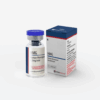
The first group includes Clenbuterol, a β2-adrenergic agonist that became popular in bodybuilding because of its stimulant and thermogenic effects. For example, Clenomed 40 contains Clenbuterol and is most logically discussed in the context of cutting and reducing body fat.

However, Clenbuterol should not be viewed as a compound that by itself preserves muscle or replaces the need for a calorie deficit. Its use is also associated with separate risks, particularly involving the cardiovascular and nervous systems.
Anabolic-androgenic compounds serve a different purpose. In competitive bodybuilding, Drostanolone (Masteron) is often discussed during the later stages of contest preparation. It is not a direct fat burner and is instead considered mainly in the context of preserving muscular condition and visual muscle density when body fat is already low.
One common form is Drostanolone Propionate. Propionate is a shorter ester of drostanolone and is well known specifically in the context of contest preparation and achieving a drier, denser appearance. This visual effect generally becomes more noticeable only when subcutaneous body fat is already low and is not related to directly accelerating fat loss.
Another option is Drostanolone Enanthate. This is a longer ester of the same active compound, so the differences between the two forms are mainly pharmacokinetic rather than representing a fundamentally different anabolic effect. In bodybuilding, the enanthate ester is also discussed in the context of preserving muscle mass and physique quality during a prolonged period of calorie restriction.
Therefore, both Drostanolone Propionate and Drostanolone Enanthate are forms of the same anabolic-androgenic compound, but they differ in ester and duration of action. This makes it possible to discuss the relevant Dinespower products separately without artificially combining two different product positions into a single link.
Clenbuterol and Drostanolone therefore should not be grouped together simply as “cutting drugs.” Their roles are fundamentally different: Clenbuterol is primarily associated with stimulant and thermogenic effects, whereas Drostanolone belongs to the anabolic-androgenic steroid class and acts through entirely different mechanisms.
Even when sports pharmacology is used, the basic principle remains unchanged: fat loss is determined by energy balance, while muscle preservation depends heavily on nutrition quality, sufficient protein intake, resistance training and recovery.
Pharmacology also cannot fully compensate for an excessively aggressive diet. If calorie intake is reduced too far, strength continuously declines and recovery is impaired, the risk of muscle loss remains regardless of the chosen strategy.
For this reason, sports pharmacology in a professional setting should be considered only as an additional factor rather than a replacement for a properly structured cutting phase. Each compound has its own mechanism of action and its own risk profile.
How to preserve muscle mass during a prolonged cutting phase
A prolonged cutting phase requires patience and consistency. Extreme restrictions rarely produce a sustainable result. It is generally more effective to reduce body fat gradually while preserving as much existing muscle mass as possible.
Well-planned fat loss is built on several core principles: a moderate calorie deficit, sufficient protein intake, continued resistance training and adequate recovery.
As body weight falls, the program usually needs to be adjusted. Energy expenditure gradually decreases, NEAT may decline, recovery becomes more difficult and an excessively fast rate of weight loss increases the risk of losing lean mass.
During a long cut, planned periods at maintenance calories or short-term refeeds can also be useful if they help preserve training quality and make the diet easier to sustain. However, they remain tools for managing a prolonged calorie deficit, not a way to bypass energy balance.
There is therefore little benefit in trying to accelerate the process at any cost. This is especially important for experienced athletes who are already relatively lean, as they usually benefit from a more conservative rate of weight loss.
Regularly monitoring body-weight trends, working weights, visual condition, everyday activity and overall well-being makes it easier to adjust calorie intake and training volume in time. This makes a prolonged cut more controlled and helps reduce the risk of losing unnecessary muscle or quickly regaining weight after the deficit ends.