Deutsch
 English
 Français
 Español
 Italiano
 Svenska
 Čeština
 Nederlands
 Русский
 Українська
 Polski



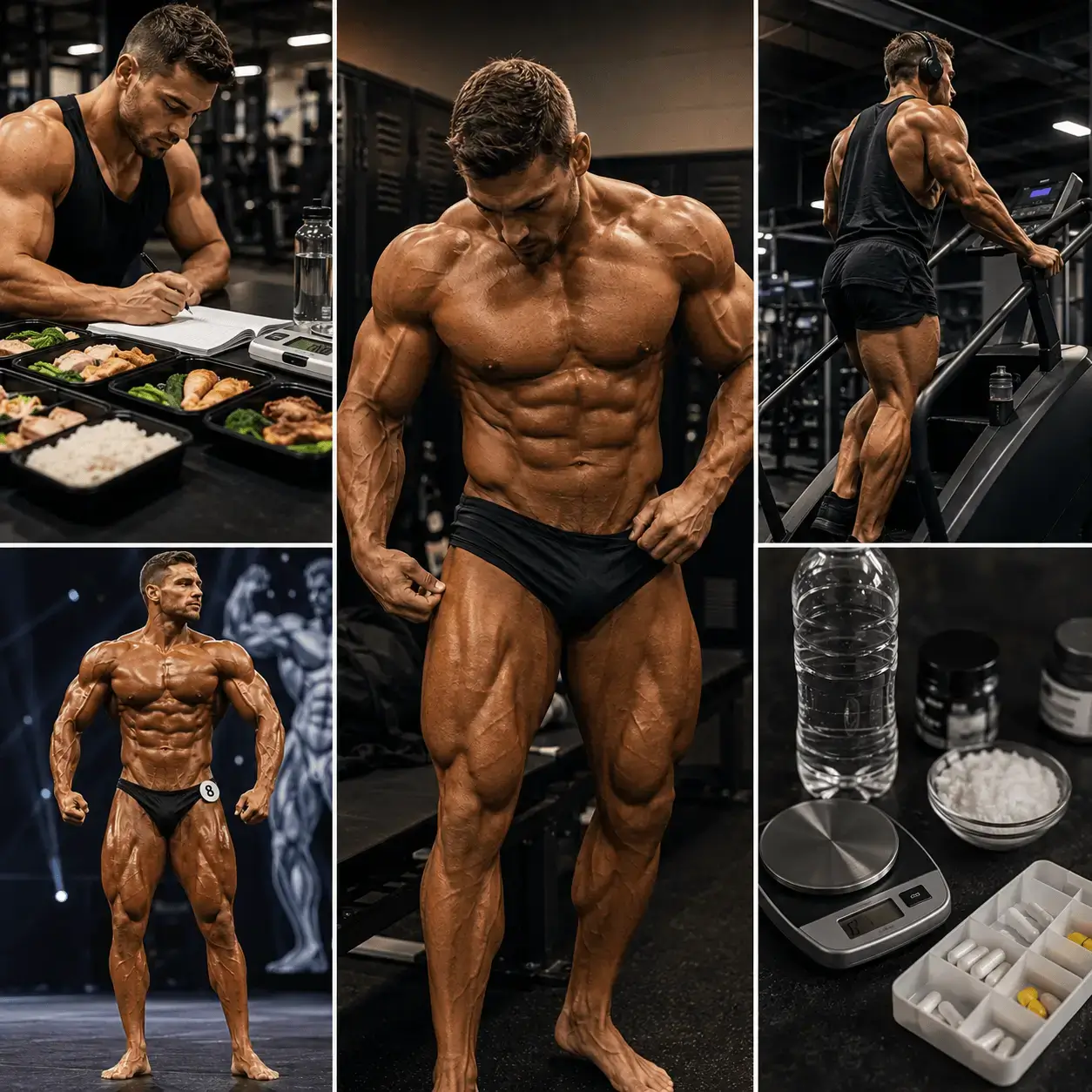
The path to maximum physical conditioning requires absolute precision from a bodybuilder in every single action. The final weeks before a competition become a mathematical calculation where every gram of nutrients and every milliliter of water matters. During this phase, bodybuilding turns into a true test of discipline and requires a deep understanding of human physiology.
Professional bodybuilding contest preparation: how peak conditioning strategy is built
Professional contest preparation in bodybuilding begins long before the athlete applies the first layer of tanning product. In professional sports, preparation is divided into clear stages: first comes muscle growth, followed by the gradual refinement of the physique. Experienced bodybuilders understand that rushing the process leads to a loss of muscle density. That is why a preparation plan is usually created 12–16 weeks in advance.
During this period, preparation is based on cyclical changes in training intensity and calorie intake. For the athlete, monitoring visual changes in the mirror becomes more important than body weight itself. To make contest preparation successful, the athlete must consistently follow several key steps:
- Gradual carbohydrate reduction to accelerate fat metabolism.
- Increasing protein intake to protect muscle tissue from catabolism.
- Regular posing practice to improve endurance and muscle control.
Discipline during professional contest preparation teaches the body to function under conditions of energy deficit. When only one month remains before the competition, the athlete enters a phase of maximum focus on details.
In the final phase of preparation, even a small mistake in calculations can cost a bodybuilder a place on stage. That is why professional athletes follow an extremely strict schedule that eliminates spontaneous meals or skipped workouts.
Cutting phase before bodybuilding competitions: fat loss and muscle preservation
Once the active cutting phase begins, priorities shift completely toward achieving maximum definition. The biggest challenge is that bodybuilding is not simply about being lean. The athlete must combine minimal subcutaneous fat with full and dense-looking muscles. Contest preparation becomes psychologically exhausting because dietary restrictions increase significantly while training intensity remains high.
To ensure that the cutting phase does not destroy hard-earned muscle mass, the bodybuilder must carefully control nitrogen balance. Every contest preparation process is individual: some athletes respond better to almost complete carbohydrate elimination, while others require strategic carb-loading phases to keep metabolism active. A high-quality cutting phase is always a search for the perfect balance between muscle separation and muscle fullness.
Effective peak-week preparation often includes multiple proven strategies:
- Fasted low-intensity cardio to increase fatty acid oxidation.
- Dividing weight training into smaller but more frequent sessions.
- Using supplements to support thyroid activity and the central nervous system.
When the cutting phase progresses correctly, the athlete’s skin gradually becomes thinner, revealing deep muscular detail. The most important factor is avoiding excessive flatness caused by overly aggressive dieting. A properly executed cutting phase transforms bodybuilding into a true visual art form, where every muscle fiber and vein becomes visible.
How professional bodybuilders peak: training, nutrition and recovery
As the competition approaches, professional athletes significantly modify the structure of their workouts. At this stage, preparation focuses less on lifting heavy weights and more on muscle detail and pump. The closer the contest gets, the denser and more intense the training process becomes. Rest periods between sets are minimized to help deplete glycogen stores and prepare the body for the final carbohydrate loading phase.
Typical bodybuilding preparation during this period includes high-repetition training aimed at refining smaller muscle groups. Such preparation creates enormous energy expenditure. Because of this, sleep and recovery become critically important. Without proper recovery, preparation quickly leads to overtraining and elevated cortisol levels, which negatively affect muscle quality.
Nutrition during this phase becomes highly structured: even vegetables and sauces are carefully weighed and measured. A properly organized cutting phase helps maintain mental sharpness necessary for following every detail of the plan. When a professional athlete successfully reaches peak condition, the final physique becomes the result of perfect synergy between hard work and intelligent recovery. Gradually, the cutting phase transitions into manipulation of water and sodium balance.
Physique control in bodybuilding: water manipulation, definition and muscle quality
The final week before stepping on stage is known as “peak week.” During this phase, water control becomes the most important factor. To achieve a hard and dry appearance, athletes often use water-loading strategies followed by significant water reduction. This forces the kidneys to work more actively and helps remove excess subcutaneous water while maintaining muscle fullness.
To create the perfect stage look, sodium and potassium control must be extremely precise. Even small electrolyte imbalances can cause the physique to appear soft and watery, hiding the muscular detail achieved during months of preparation. During these days, athletes must maintain extreme discipline because thirst, fatigue and weakness become constant companions. However, this level of control is exactly what creates dramatic muscle separation under stage lighting.
The visual quality of the musculature depends heavily on how accurately carbohydrate loading is managed. When done correctly, the athlete appears on stage with full, hard and highly detailed muscles.
As contest preparation enters its final phase, professional bodybuilders monitor changes in their physique almost hourly. This process requires a deep understanding of individual body responses and years of practical experience.
Drugs and compounds for contest preparation: final conditioning and stage-ready physique
The use of supportive compounds in professional bodybuilding requires serious responsibility and advanced knowledge. In strength sports, pharmacology is used to achieve extreme physical conditioning that the human body cannot naturally maintain for long periods. The main compounds are selected to maximize dryness and muscle hardness while preserving muscle fullness during severe caloric restriction. At the same time, health monitoring remains critically important to avoid dangerous stress on the body.
Sports pharmacology during final contest preparation often includes diuretics, anti-estrogens and fat-burning compounds. To control estrogen levels and reduce water retention, athletes frequently use Exemestane and other aromatase inhibitors. During aggressive cutting phases, compounds such as Clenbuterol, ECA stacks and Cardarine (GW-501516) are commonly used to enhance lipolysis and maintain endurance under calorie restriction. To preserve dry muscle mass and hardness, bodybuilders also rely on Testosterone Propionate, Masteron (Drostanolone) and modern SARMs, which help maintain definition without excessive water retention.
Additionally, preparation often includes peptides for recovery and muscle quality support, as well as compounds used to stabilize hormonal balance during extreme physical stress. Properly selected products help athletes maintain muscle volume right up to competition day without sacrificing hardness and visual quality.
Bodybuilding at the professional level is impossible without scientific precision in every process. In this system, pharmacology is only one component of success. When all compounds have fulfilled their purpose and contest preparation is complete, the moment of truth finally arrives. On stage, the athlete demonstrates whose strategy was more precise and who truly deserves the champion title.