Deutsch
 English
 Français
 Español
 Italiano
 Svenska
 Čeština
 Nederlands
 Русский
 Українська
 Polski




In modern sports, athletes are constantly looking for ways to optimize muscle hypertrophy, recovery, and tolerance to intense training loads. One of the best-known anabolic compounds in disciplines where muscle size and quality are especially important is Nandrolone. This steroid has been used in athletic environments for several decades and is primarily associated with muscle gain.
Bodybuilding requires not only discipline in training and nutrition, but also an understanding of how the body responds physiologically. In professional settings, Nandrolone became widely known because of its pronounced anabolic activity and the characteristics of its pharmacological profile. Its effects are not limited to potential muscle growth, however. Its influence on connective tissue, bone metabolism, and recovery processes also attracts considerable interest.
What is Nandrolone?
Nandrolone (19-nortestosterone) is an anabolic-androgenic steroid that is structurally similar to testosterone. Its molecule differs by the absence of a methyl group at the 19th carbon atom, which is where the name 19-nortestosterone comes from.
Nandrolone has strong anabolic activity with comparatively lower androgenic activity than testosterone. At the same time, its metabolism differs from that of testosterone in several important ways.
In tissues with high 5α-reductase activity, Nandrolone is converted primarily into dihydronandrolone (DHN). This compound has weaker androgenic activity than dihydrotestosterone (DHT), which is formed from testosterone. This difference partly explains the distinct androgenic profiles of the two hormones.
Lower androgenic activity, however, does not mean an absence of side effects. Nandrolone can significantly suppress the body’s natural hormonal axis and produce systemic effects throughout the body, which must be taken into account when evaluating its role in sports pharmacology.
How Nandrolone works: why it can support muscle growth
The mechanism of action of Nandrolone is primarily related to activation of androgen receptors. Their stimulation alters the expression of genes involved in protein metabolism and the adaptation of muscle tissue to training stress.
The main mechanisms associated with the anabolic effects of Nandrolone include:
- Activation of androgen receptors in muscle tissue. This creates conditions that can support anabolic processes and muscle protein synthesis.
- Support of a positive nitrogen balance. Nitrogen retention is commonly used as one of the indicators of conditions favorable for maintaining and building protein tissue.
- Reduction in the rate of protein breakdown. This may help preserve muscle tissue when sufficient protein and energy are available.
- Influence on red blood cell production. Androgenic compounds can stimulate erythropoiesis, which is one of the systemic effects associated with Nandrolone and also requires attention to blood parameters.
This mechanism helps explain the interest in Nandrolone during phases when muscle gain is the main objective. The outcome, however, does not depend on the compound alone. Effective hypertrophy still requires adequate nutrition, sufficient protein intake, progressive training load, and proper recovery.
There is also no such thing as a unique form of “Nandrolone muscle” that is guaranteed to remain after the compound is discontinued. How well the achieved results are maintained depends on training, nutrition, overall body composition, and subsequent changes in the hormonal environment.
Nandrolone and recovery: effects on muscles, joints, and training tolerance
One reason Nandrolone attracts attention in bodybuilding is its potential influence on connective tissue and bone tissue. This is why athletes often associate it not only with muscle growth, but also with a subjective feeling of greater joint comfort during heavy training.
The effects of Nandrolone on processes related to collagen metabolism and bone tissue have been studied. In addition, some athletes report reduced joint discomfort while using the compound.
Several potentially relevant effects can be highlighted in this context:
- influence on collagen metabolism and connective tissue;
- possible reduction in subjective joint discomfort;
- effects on bone metabolism and bone mineral density.
These properties should not be interpreted as meaning that Nandrolone can heal damaged joints, tendons, or ligaments. Reduced pain does not mean that an injured structure has fully recovered or is better protected against further injury.
This is especially important when training with heavy loads. If a joint or tendon was already causing problems before use, a reduction in subjective discomfort should not be treated as a reason to suddenly increase training intensity or load.
Proper recovery still depends on appropriately managed training volume, nutrition, sleep, and sufficient time between demanding training sessions.
Nandrolone esters: differences between Decanoate and Phenylpropionate
Nandrolone can be used in the form of different esters. The ester does not change the fundamental mechanism of action of the active compound, but it does significantly affect the rate of release and the duration of pharmacological activity.
Nandrolone Decanoate
Nandrolone Decanoate is the best-known long-ester form of Nandrolone. After administration, the active compound is released gradually from the depot, resulting in slower changes in concentration and a longer duration of action.
This is also the form most commonly associated with the classic name Deca. One relevant example in the Dinespower range is Decamed 250, a product based on Nandrolone Decanoate. This allows the product to be discussed directly in the context of the pharmacological characteristics of the long ester rather than inserted into the article as a separate promotional mention.

Nandrolone Phenylpropionate (NPP)
Nandrolone Phenylpropionate (NPP) is a shorter-ester form of the same active compound. It is characterized by faster release of Nandrolone and a faster decline in concentration after administration is discontinued compared with Decanoate.
At the same time, Nandrolone Phenylpropionate is not a fundamentally different anabolic compound. Its main difference from Decanoate lies in pharmacokinetics: the active compound remains Nandrolone in both cases, so the basic anabolic and systemic effects have the same underlying origin.
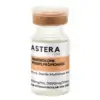
The differences between Nandrolone Decanoate and Nandrolone Phenylpropionate therefore relate primarily to the ester and the rate at which the active compound is released, rather than to fundamentally different effects on muscle tissue.
Nandrolone at different stages of athletic preparation
In sports practice, Nandrolone is most often associated with periods when gaining muscle mass is the primary objective. Its pronounced anabolic activity has made it one of the historically common compounds in professional bodybuilding.
In non-medical use, Nandrolone may also be combined with other anabolic-androgenic steroids. However, combining several hormonally active compounds makes the body’s response more difficult to predict and may increase the severity of endocrine, cardiovascular, and other adverse effects.
Particular attention should be paid to the effect of Nandrolone on the body’s natural hormonal system. The compound can strongly suppress the hypothalamic-pituitary-gonadal axis, which can significantly reduce natural testosterone production.
Nandrolone also has progestogenic activity. This does not mean, however, that medication to reduce prolactin is automatically required during its use. Any need for correction should be evaluated on the basis of actual laboratory values and the clinical picture rather than solely on the fact that Nandrolone is being used.
In competitive bodybuilding, Nandrolone may also appear outside a traditional mass-gaining phase. However, its tendency to influence fluid retention and its overall profile distinguish it from compounds more commonly associated with achieving an extremely dry visual appearance.
The requirements of professional sport must also be considered separately. Nandrolone is classified as a prohibited anabolic agent, and its metabolites may remain detectable for much longer than the compound’s immediate pharmacological effects. For this reason, elimination half-life should not be used as a guide for estimating doping-control detection times.
Benefits, limitations, and the role of Nandrolone in modern bodybuilding
Nandrolone remains one of the most recognizable anabolic steroids in the history of bodybuilding. Interest in the compound is mainly related to its pronounced anabolic activity, its effects on muscle tissue, and its interaction with connective and bone tissue.
At the same time, its potential athletic effects cannot be separated from its systemic impact on the body. Important limitations and risks include:
- significant suppression of natural testosterone production;
- changes in lipid profile and a potential increase in cardiovascular strain;
- effects on reproductive and sexual function;
- progestogenic activity and possible changes in hormonal status;
- effects on erythropoiesis and blood parameters;
- other androgenic and individually variable adverse reactions.
Its lower androgenic activity compared with testosterone therefore does not make Nandrolone automatically safe.
Its effects on the joints should also be viewed realistically. A possible reduction in discomfort and effects on connective-tissue metabolism do not amount to full treatment of injuries and do not remove the need to control training load.
Ultimately, muscle growth, strength progression, and recovery are determined by a combination of factors. Pharmacological intervention can alter the body’s anabolic environment, but it does not replace nutrition, training, or rest.
Understanding how Nandrolone works, how its esters differ, and what limitations and risks are involved makes it possible to evaluate its role in modern bodybuilding more objectively — without overstating its advantages or underestimating its potential risks.