Deutsch
 English
 Français
 Español
 Italiano
 Svenska
 Čeština
 Nederlands
 Русский
 Українська
 Polski




Professional athletes can achieve high-level results in bodybuilding by combining effective training programs, proper nutrition, and sports pharmacology. Muscle definition and successful cutting depend on the selected products and the training program used to build muscle mass. Sports pharmacology can make it possible to build muscle while reducing excess body fat.
A muscle-building training program involves distributing the workload between different muscle groups. Each muscle group is trained approximately once every 4 days, allowing enough time for proper recovery. Modern products can accelerate anabolic processes in the body, stimulate metabolism, and have a positive effect on bones, joints, cognitive performance, and sleep.
By coordinating muscle-building workouts with the use of bodybuilding products, athletes can achieve several goals:
- actively build high-quality lean muscle mass;
- reduce excess body fat;
- recover quickly after strength training;
- keep the nervous system in good condition.
Combining strength training for muscle gain with sports pharmacology can increase strength and endurance while promoting active lean muscle growth.
Training for muscle gain: how the approach changes on a sports pharmacology cycle
One of the main principles of a muscle-building training program for both men and women is split training. To achieve quality lean muscle growth and body recomposition, each muscle group should be trained once every 4–6 days, while training frequency and intensity are gradually increased. In bodybuilding, athletes progressively increase the weights to maximize the stimulus for muscle growth. Recovery and sleep must also be properly adjusted to support regeneration and prevent exhaustion.
After a medical examination, suitable products may be selected on the recommendation of a doctor or sports coach. These are sports pharmacology products for muscle gain aimed at increasing protein synthesis, accelerating muscle fiber growth, and improving muscle density. With this type of support, athletes can adapt more effectively to training loads and improve endurance and strength.
High-quality products for muscle gain can help maintain a stable anabolic environment throughout a cycle, preserve muscle volume during a later cutting phase, improve skin condition, and support joints and bones. Modern SARMs act selectively in muscle tissue without affecting other important systems of the body to the same extent. They do not cause pronounced water retention, helping the physique remain more clearly defined.
Muscle-building training program: training volume, intensity, and progression of working weights
Muscle-building workouts in bodybuilding are based on strength exercises. Training at home requires suitable sports equipment, while gyms provide access to modern machines and free weights. What principles should a muscle-building training program for men follow:
- essential compound movements that activate large muscle groups — bench presses, squats, deadlifts, and other exercises;
- isolation exercises for specific muscles;
- supersets;
- drop sets;
- training to muscular failure.
All these methods increase the training stimulus for muscle fiber growth. Bodybuilding workouts for mass gain require progressive increases in working weights from week to week. Training consistency is also essential. For maximum progress, a weekly volume of up to 20 working sets is recommended for large muscle groups and up to 12 sets for smaller muscles.
How is the optimal working weight calculated? It is approximately 80% of the maximum weight an athlete can lift for one repetition. With this weight, the athlete should be able to complete at least 6–8 repetitions in each set. Workouts can be performed in the gym using specialized equipment or at home with push-ups, squats, dumbbells, or a barbell.
Strength training for muscle gain: how recovery affects strength progress
Recovery is the key to consistent progress because muscles grow during periods of rest. Breaks between exercises should be long enough to maintain training quality. It is also important to establish a proper sleep routine, with 8–12 hours of sleep per day. The supercompensation phase is a crucial stage of muscle growth. During intensive strength training, muscle fibers are damaged, which stimulates their repair, strengthening, and growth during recovery.
Inadequate recovery creates several risks. Adaptation of the nervous system slows down, protein synthesis decreases, the risk of injury rises, and overtraining can develop. Why full recovery is so important:
- growth hormone, which is released during sleep, participates in the regeneration of muscle fibers;
- during rest, muscles replenish their stores of creatine, glycogen, and ATP — essential fuel for strength training;
- the nervous system needs enough time to adapt to training loads so the body can respond effectively to new growth stimuli.
A home muscle-building training program should also follow a split structure so that individual muscle groups have enough time to recover. Daily full-body training is better avoided, and a targeted muscle group should be given up to 48 hours of rest.
The best training programs for muscle gain: split, full body, and other approaches
The choice of training program depends on the athlete’s experience. Full Body training is suitable for beginners, while experienced bodybuilders often prefer separate routines such as upper/lower or traditional split training. Full Body workouts train the entire body in a single session. They are usually performed three times per week and help initiate muscle growth while supporting nervous system adaptation.
The Push/Pull/Legs program is suitable for male athletes with an intermediate level of experience. This training structure helps create an effective balance between workload and recovery for each muscle group. Sessions can be scheduled three times per week, or individual muscle groups can be trained twice weekly.
The upper/lower approach is designed to increase training intensity through four sessions per week. On two days, for example Monday and Thursday, the back, arms, shoulders, and chest are trained, while the other two days focus on the legs, abs, and glutes.
The Bro Split is often used by advanced and experienced male bodybuilders. How are these workouts structured:
- 1 or 2 muscle groups may be trained during a single workout;
- a high training volume is used;
- the emphasis is placed on deep fatigue of the target muscles;
- at least 5 workouts per week, with each day dedicated to an isolated muscle group.
The general rules for a muscle-building program at home or in the gym should include gradual progressive increases in weight, a calorie surplus, and at least 10 working sets per muscle group each week. The athlete should structure the diet to consume 10–15% more calories than are burned.
Muscle-building training program at home and in the gym: how to organize the workload
Effective stimulation of muscle growth comes from combining progressive overload, a calorie surplus, and full recovery. Depending on whether the athlete trains at home or in the gym, several important aspects of workload organization can be identified:
- select suitable compound exercises;
- determine working weights, repetitions, and sets;
- create a clear schedule for training frequency and sleep, and plan the diet accordingly.
The best training programs for muscle gain actively involve large muscle groups, provide optimal progression of the workload, and allow enough time for full recovery.
Sports pharmacology and products for muscle gain: combining recovery, training, and muscle growth
Sports pharmacology can help athletes make more effective use of the potential of their training and nutrition, but maximum results are achieved only through a comprehensive approach. Stable muscle gain requires progressive increases in training load, a calorie surplus, full recovery, and properly selected products that match the goals of the cycle.
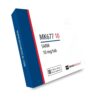
Depending on their goals, athletes use different categories of sports pharmacology. To increase strength and build high-quality muscle mass, modern SARMs such as RAD-140 and LGD-4033 are widely used. When faster recovery, better sleep quality, and support for natural growth hormone secretion are the priority, MK-677 and peptides such as CJC-1295 DAC and Ipamorelin can be useful additions. With high training volumes, BPC-157 and TB-500 are often used to support the recovery of muscles, ligaments, and tendons and help athletes return to full training loads more quickly.
Another important part of any cycle is maintaining hormonal balance and planning the end of the cycle correctly. When necessary, PCT products are used to help restore natural testosterone production and preserve the results achieved after the cycle.
Properly selected sports pharmacology can help maintain a strong anabolic environment, accelerate recovery after intensive workouts, and support faster progress in strength. The use of certified products together with a well-structured training program and full recovery can help achieve steady lean muscle growth and maximize the potential of every training cycle.