Deutsch
 English
 Français
 Español
 Italiano
 Svenska
 Čeština
 Nederlands
 Русский
 Українська
 Polski



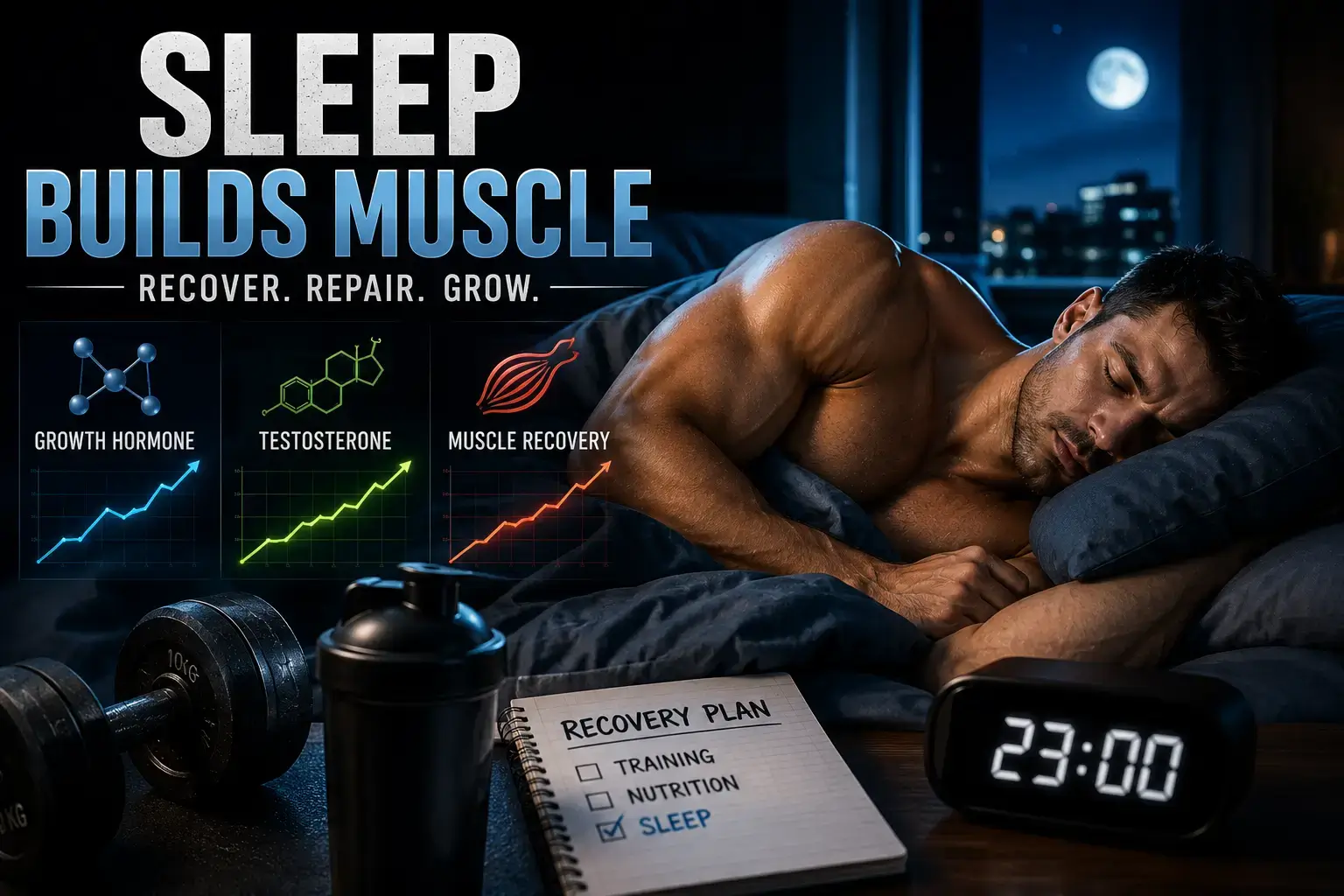
Progress in bodybuilding depends not only on training loads in the gym and sports nutrition. Many athletes underestimate full nighttime rest, although this is exactly the period when the main anabolic processes take place.
Quality sleep triggers cell division and physiological renewal of the body. For an athlete’s muscle mass to increase steadily, full nighttime recovery is essential.
Sleep and muscle growth: why recovery begins during sleep
During active training, microscopic damage occurs in the protein structures of the musculature, and this damage must be repaired quickly for body volume to increase. During wakefulness, the body spends resources on maintaining everyday activity, energy metabolism, and cognitive functions.
True deep recovery of muscle fibers starts only after falling asleep, when the overall metabolic load drops to a minimum. At this time, the central nervous system switches into a mode of inhibition, giving way to cellular repair processes.
If an athlete regularly lacks sleep, the rate of tissue healing drops sharply, which leads to stagnation in strength indicators. Quality nighttime sleep shifts the body into an anabolic state by blocking the production of destructive cortisol. Regular heavy workouts require mandatory compensation for the energy spent; otherwise, catabolism will begin instead of hypertrophy. Sufficient rest is a guarantee that the muscle glycogen used during training will be fully replenished by the next visit to the gym.
Muscle recovery during sleep: tissue regeneration and adaptation to training loads
During nighttime rest, blood flow in skeletal muscles increases significantly, delivering amino acids and oxygen to the cells. Physiological adaptation to physical loads occurs in waves, following strict biological clocks. There are several stages of nighttime rest, each of which performs its own tasks:
- slow-wave sleep delivers the maximum amount of nutrients to damaged cell membranes;
- the rapid eye movement phase stabilizes neural connections, improving motor memory and muscle coordination;
- transitional cycles normalize blood pressure and reduce overall systemic inflammation in the body.
Thanks to these processes, muscles adapt to the stress they have endured, increasing their cross-section and density. Accelerated healing of microtraumas protects ligaments from strains and bone structures from cracks. Without sufficient rest, microdamage accumulates, turns into chronic inflammation, and leads to overtraining. Only full sleep restores elasticity to tissues, allowing the athlete to progress in training without injuries and prolonged spasms. Well-established recovery protects the musculoskeletal system from overload.
Sleep and growth hormone: how nighttime recovery affects anabolic processes
The main portion of endogenous anabolic substances is secreted by the endocrine system during the dark hours of the day. Natural production of somatotropin (growth hormone) has a pronounced peak pattern and is strictly tied to human circadian rhythms. About an hour after falling asleep, the deep sleep phase begins, during which the pituitary gland releases a powerful portion of stimulators into the blood. Growth hormone coordinates protein synthesis, accelerates the transport of amino acids into myocytes, and activates the breakdown of subcutaneous fat for energy.
If one falls asleep too late, the natural hormonal peak shifts or becomes completely blocked, depriving the body of its building potential. Stable growth hormone stimulates the division of satellite cells, which fuse with damaged muscle fibers and increase the volume of the musculature itself.
This physiological process directly determines how quickly overall muscle mass will increase after heavy squats or presses. By missing the valuable hours of rest, a bodybuilder voluntarily reduces the effectiveness of pharmacological support and the regular diet. Timely production of anabolic factors at night determines muscle density and the speed of recovery of the joint and ligament apparatus.
Testosterone and sleep: the influence of rest quality on an athlete’s hormonal background
The production of the main male androgen (testosterone) directly depends on the duration and continuity of nighttime rest. According to clinical studies, the synthesis of this hormone drops by almost 15% after just one week of sleep deprivation. When sleep is reduced to five hours per day, testosterone levels fall to those of a man who is ten years older.
Under such conditions, the male sex hormone stops performing its functions properly: the athlete’s libido decreases, lethargy appears, and sports motivation worsens. However, for testosterone levels to normalize, it is not only important how much the athlete sleeps. The male hormone should be produced in the complete absence of external irritants.
Chronic lack of rest provokes a compensatory release of cortisol — the direct antagonist of androgens. This stress hormone actively breaks down muscles, stimulates the accumulation of visceral fat, and retains excess water under the skin.
When testosterone remains at a consistently high level, the utilization of fatty acids accelerates and overall endurance increases. Quality sleep protects the endocrine system from exhaustion and preserves high receptor sensitivity to anabolic stimuli. Free testosterone circulates in the blood more effectively if the nervous system has fully recovered overnight.
The influence of sleep on muscle growth and training results
The physiological impact of nighttime rest deficiency affects not only hormones, but also strength indicators and mental concentration. A tired brain is unable to generate a powerful neuromuscular impulse, which causes working weights in exercises to decrease. The direct influence of sleep deprivation is expressed in reduced glycogen stores, causing muscles to lose fullness and acidify quickly. Impaired coordination and general inattentiveness during complex movements significantly increase the risk of serious injuries.
Systematic quality nighttime rest has an exclusively positive influence on athletic indicators and overall body composition. Regular hypertrophy is possible only when all conditions for supercompensation of energy resources are created. A noticeable result appears in increased muscle density, accelerated metabolism, and higher weight on the bar.
The optimal influence of rest lies in creating a stable anabolic environment where every training session brings maximum benefit. If the body’s signals of fatigue are ignored, the training result will turn out opposite to expectations, triggering processes of exhaustion.
How to improve sleep for muscle recovery, growth hormone production, and training progress
Optimizing nighttime rest requires discipline and adherence to sleep hygiene rules, just like the training process or nutrition. To maximize athletic results, it is necessary to create optimal conditions for the natural production of melatonin and growth hormone. To improve sleep quality, it is recommended to:
- go to bed and wake up at the same time, even on weekends;
- completely eliminate sources of bright light and the use of gadgets before sleep;
- maintain the bedroom temperature at 18–20 °C and ventilate the room regularly;
- avoid heavy food, alcohol, and large amounts of caffeine several hours before sleep.
Following these rules makes it easier to fall asleep faster, increase the duration of deep sleep, and create optimal conditions for muscle recovery, normal secretion of growth hormone, and maintenance of high testosterone levels. It is during this period that the body most effectively replenishes energy reserves, restores damaged muscle fibers, and adapts to the training load received.
If an athlete trains regularly at high intensity, modern sports pharmacology products can provide additional support for recovery processes. To stimulate natural growth hormone production, many athletes use MK-677 (Ibutamoren), as well as peptides: CJC-1295 DAC and Ipamorelin. To accelerate recovery after heavy workouts and support muscles, tendons, and ligaments, BPC-157 and TB-500 are in demand and are often used in comprehensive recovery programs.
The Dinespower online store offers certified products for supporting recovery, muscle mass growth, and improving the effectiveness of the training process. However, it is important to understand that no product can replace full sleep. Maximum results are achieved only when quality rest, balanced nutrition, a properly structured training program, and correctly selected sports pharmacology work as a single system. This comprehensive approach makes it possible to progress faster, maintain a high level of performance, and steadily gain quality muscle mass.