Deutsch
 English
 Français
 Español
 Italiano
 Svenska
 Čeština
 Nederlands
 Русский
 Українська
 Polski


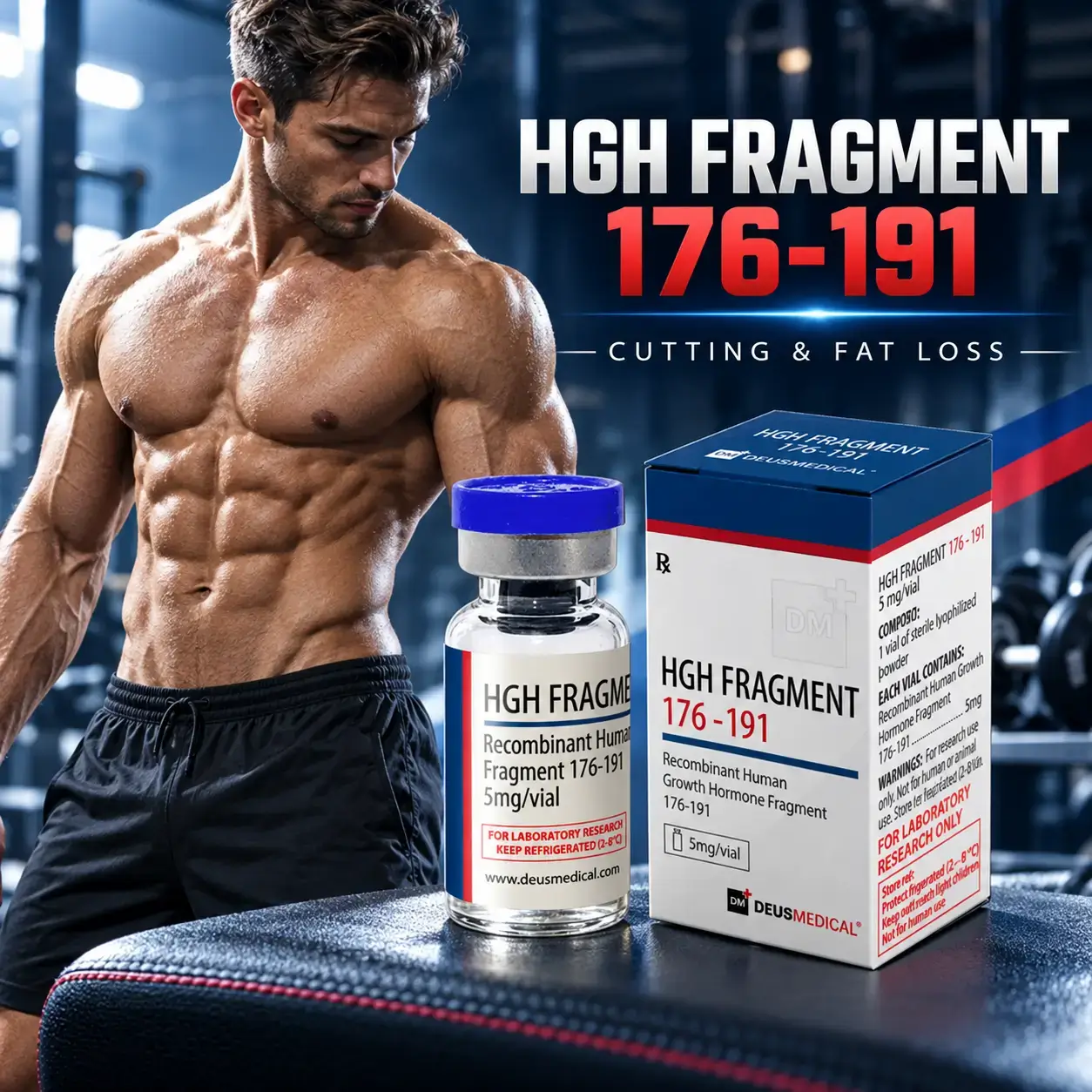
HGH Fragment 176-191 is a short peptide related to the C-terminal portion of the somatotropin molecule. In sports, it is used almost exclusively in the context of cutting and reducing body fat rather than building muscle.
The main idea behind the compound is to act primarily on fat metabolism without reproducing the full range of effects associated with growth hormone itself. For that reason, Fragment 176-191 should not be viewed as “Somatotropin in a smaller format”: its role and expected outcomes are different.
How Fragment 176-191 works and whether it helps burn fat
Interest in Fragment 176-191 is related to its potential influence on lipolysis — the release of fatty acids from fat cells — and on reducing the formation of new fat stores. This is where its reputation as a fat-loss peptide comes from.
However, the compound itself does not create a calorie deficit. If a person consumes more energy than they expend, Fragment 176-191 does not override that balance and does not force the body to selectively remove fat from the abdomen or other problem areas.
During a cutting phase, it makes more sense to view it as an additional tool alongside an already established diet and activity plan. The main change in body fat is still determined by how consistently the athlete maintains a calorie deficit.
What research on Fragment 176-191 shows
It is important to separate an attractive mechanism from an effect that has actually been demonstrated in humans. A substantial part of the data on the influence of similar growth hormone fragments on lipolysis comes from laboratory and animal models.
The main human evidence relates to the compound AOD9604, which is often grouped together with HGH Fragment 176-191 in commercial descriptions even though the molecules are not completely identical.
Studies of AOD9604 have shown that the compound does not behave like full-length Somatotropin: a pronounced increase in IGF-1 and the typical effects on carbohydrate metabolism were not observed. This is consistent with the original idea of separating a potential effect on fat metabolism from the other effects of growth hormone.
At the same time, evidence for a clearly noticeable weight-loss effect remains limited. Larger human trials were unable to convincingly confirm the pronounced reduction in body weight that is often attributed to such peptides in sports marketing.
Expectations should therefore remain moderate: the mechanism is interesting, but Fragment 176-191 cannot be placed on the same level as well-studied methods for reducing body fat.
How Fragment 176-191 is used during cutting
In sports practice, a range of around 250–500 mcg per day is commonly discussed. The daily amount is used in one or two subcutaneous administrations, while a typical period of use is often considered to be around 8–12 weeks.
Fragment 176-191 is usually used on an empty stomach. Common timing options include before cardio or during the period before sleep, when some time has already passed since the last meal.
The reasoning is that the rise in insulin after eating reduces lipolytic activity. For that reason, using the compound immediately around a large meal is less logical in relation to its proposed purpose.
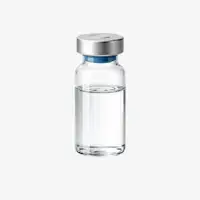
The compound is supplied in lyophilized form and is reconstituted with bacteriostatic water before use. The exact amount of water and the volume of a single injection depend on the amount of peptide in the vial and the selected concentration of the solution, so it is better to use the manufacturer’s instructions and a separate dosage calculator when preparing it.
Fragment 176-191 is not an androgen and does not suppress endogenous Testosterone production, so classic PCT is not required after using it.
Fragment 176-191 in the Dinespower range
Dinespower offers two versions containing the same active peptide but different amounts per vial. The main practical difference for the buyer is the vial size and the number of vials required for the chosen period of use.
HGH Fragment 176-191 by Deus Medical contains 5 mg of peptide per vial. The smaller size is convenient for users who prefer more compact vials and do not want to store a larger volume of reconstituted product.

HGH Fragment 176-191 by Astera Labs is supplied at 10 mg per vial. The larger format is more suitable for users who prefer to use fewer vials over a full cycle.
What Fragment 176-191 is usually combined with during cutting
Fragment 176-191 is more often used as an additional component of an already established cutting protocol. As an anabolic base, such cycles may include Testosterone Propionate, while Oxandrolone or Stanozolol may be considered to provide additional support for preserving muscle mass during a calorie deficit.
Fragment 176-191 itself plays a different role. It is added with the expectation of influencing fat metabolism rather than maintaining an androgenic background or directly preserving muscle tissue.
It may also be combined with Somatotropin. These compounds are not interchangeable: Somatotropin has a much broader range of effects, while Fragment 176-191 is used as a more narrowly targeted experimental component during cutting.
Fragment 176-191 vs Somatotropin: what is the difference?
Fragment 176-191 and full-length growth hormone are used with different expectations. The former is of interest almost exclusively in relation to fat metabolism, while Somatotropin has much broader effects and influences the GH/IGF-1 system.
| Parameter | Fragment 176-191 | Somatotropin |
| Main sports-related goal | Additional support for reducing body fat | Broader effect on body composition and recovery |
| Effect on IGF-1 | A pronounced increase is generally not expected | Increases IGF-1 |
| Muscle gain | Not a primary goal | May influence lean body mass |
| Carbohydrate metabolism | Does not show the profile typical of full-length GH | May reduce insulin sensitivity |
| Typical limitations | Limited evidence for effectiveness | Broader systemic profile and more potential side effects |
For the same reason, Fragment 176-191 is sometimes used together with Somatotropin or growth hormone secretagogues. However, adding several compounds does not mean that their fat-loss effects will automatically add together.
Side effects and limitations of Fragment 176-191
The side-effect profile of Fragment 176-191 should not automatically be copied from full-length growth hormone. The fragment is not typically associated with the same pronounced effect on IGF-1, so expecting an identical set of side effects would be incorrect.
In available studies of similar compounds, relatively moderate reactions have been reported more often, including headache, fatigue and local discomfort after subcutaneous administration. Redness, soreness or irritation at the injection site may also occur.
The main limitation is different: there is a lack of high-quality long-term data. The absence of a large number of documented problems does not mean that prolonged non-medical use has been well studied.
The quality of the peptide itself also matters. For an injectable product, the actual concentration of the active ingredient, storage conditions and sterility after reconstitution are important.
Fragment 176-191 before and after: results and reviews
Evaluating Fragment 176-191 from “before and after” photos is particularly difficult because almost nobody uses it independently of a diet. If someone simultaneously reduces calories, adds cardio and loses several kilograms over two months, it is impossible to isolate the independent contribution of the peptide from that result.
For personal tracking, it is more useful to look at the rate of change in body weight and waist circumference. If diet and training activity remain roughly the same, it is at least possible to assess whether the trend changes after adding the compound.
Reviews most often mention a smaller waist, more pronounced definition and faster progress in so-called “stubborn” fat areas. Such observations are interesting as user experience, but they do not prove localized fat loss and make it difficult to separate the effect of the peptide from the overall cutting process.
Main conclusions: is Fragment 176-191 worth using during cutting?
HGH Fragment 176-191 may be of interest to an athlete who already has diet, a calorie deficit and a training routine in place and is considering the peptide specifically as an additional tool.
It should not be expected to produce powerful fat loss on its own, build muscle like full-length Somatotropin or selectively remove fat from problem areas.
The main trade-off is between an interesting proposed mechanism and limited human evidence. For that reason, it is better evaluated not by promises of “effortless fat burning,” but by the actual change in body fat within an already effective cutting plan.