Deutsch
 English
 Français
 Español
 Italiano
 Svenska
 Čeština
 Nederlands
 Русский
 Українська
 Polski



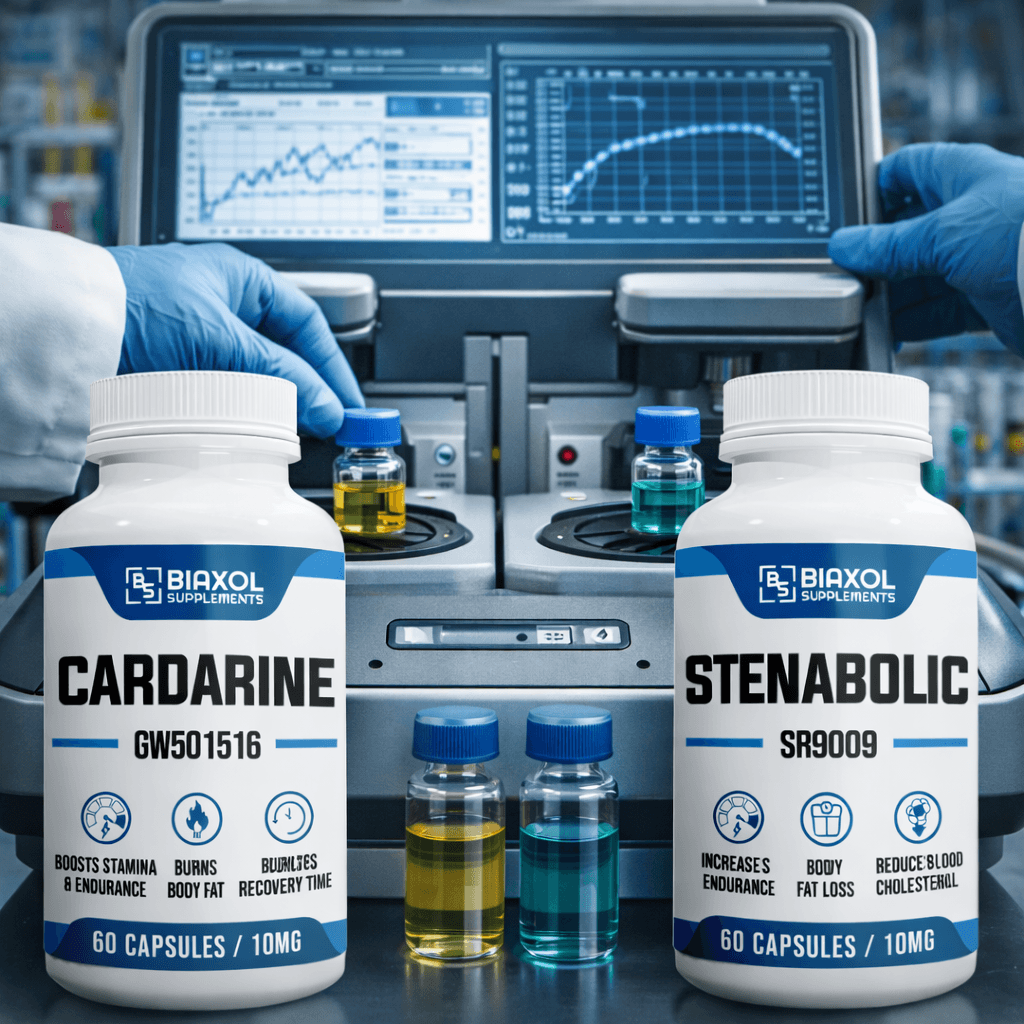
Interest in metabolic activators has grown noticeably in recent years. This is largely because many athletes are searching for ways to accelerate fat burning and increase endurance without directly interfering with the hormonal system. In this context, two compounds are discussed most often – GW501516 and SR9009. For this reason, the topic GW501516 vs SR9009 regularly appears in both sports and scientific communities. Comparing GW501516 and SR9009 helps better understand the mechanisms behind their effects and what realistic expectations users should have.
GW501516 and SR9009 as metabolic activators: general principles and goals of use
Cardarine and Stenabolic belong to the class of metabolic regulators. At the same time, they are not hormonal substances. Their primary purpose is to influence cellular energy metabolism. This makes them attractive for people who want to accelerate fat loss while improving overall physical performance. That is why comparisons between Cardarine and Stenabolic are frequently discussed in the context of fitness and endurance.
Cardarine and Stenabolic do not directly stimulate muscle growth. Instead, they work through changes in metabolic processes within the body. This is their key difference from traditional anabolic compounds. Therefore, the question of whether to choose GW501516 or SR9009 usually arises among individuals who focus not on gaining mass, but on improving body composition and maintaining high energy levels.
Mechanism of action of GW501516 vs SR9009: influence on metabolism
The mechanism of action of GW501516 is based on activation of the PPAR-δ receptor. This receptor plays a major role in regulating fatty acid oxidation and improving endurance capacity. As a result, the body begins to use fat more actively as a source of energy. This leads to reduced fat mass and improved performance during prolonged physical activity.
The mechanism of action of SR9009 is fundamentally different. It interacts with REV-ERB nuclear receptors, which are associated with circadian rhythms and metabolic regulation. Through this pathway, SR9009 affects energy expenditure and glucose metabolism. This is why the differences between GW501516 and SR9009 lie not only in their effects but also in the biological pathways they influence.
Effectiveness for fat burning and endurance: what research and laboratory data show
From the perspective of effectiveness, both substances demonstrate potential for reducing body fat. However, their mechanisms differ. Cardarine is more commonly associated with improvements in aerobic endurance. In animal experiments, increased physical activity duration without signs of fatigue has been observed. This makes it particularly popular among athletes focused on cardio-based training.
Stenabolic has a stronger influence on overall metabolic activity. It accelerates metabolism and increases calorie expenditure even at rest. For this reason, the comparison between Cardarine and Stenabolic for fat loss often comes down to the question of what matters more – endurance performance or basal metabolic rate. In reality, the effectiveness of either compound depends on individual characteristics and training goals.
Safety profile of the compounds
The safety of GW501516 remains a topic of debate. Some animal studies have identified potential risks associated with long-term use of Cardarine. This has raised concerns within the scientific community. However, there is very limited clinical data involving humans, which makes it difficult to draw definitive conclusions.
The safety of SR9009 is also not fully understood. Stenabolic is often considered less aggressive in its impact on organs, but long-term effects remain unclear. Therefore, comparing Cardarine and Stenabolic in terms of safety is always somewhat conditional. Both substances remain experimental compounds and require a cautious and informed approach.
Side effects: potential risks
When discussing GW501516, potential side effects are mainly linked to liver-related concerns and possible oncological risks observed in animal studies. These findings have not been confirmed in human trials, but they should not be ignored. Any use should therefore be considered experimental and potentially associated with risks.
With SR9009, reported side effects are generally considered less pronounced. The most commonly mentioned issues involve sleep disturbances and fluctuations in energy levels. This is related to its influence on circadian rhythm regulation. However, large-scale research is still lacking, meaning that most conclusions remain theoretical and cannot be considered medical recommendations.
Laboratory analysis: purity, stability and quality control
Laboratory analysis of GW501516 plays a critical role because the market contains a large number of counterfeit or unstable formulations. The quality of the compound directly affects both effectiveness and safety. Without confirmed purity, it is impossible to predict results, since impurities may increase side effects or distort the intended action of the compound.
Professional laboratories use several analytical methods, including spectrometry and chromatography. These techniques allow researchers to determine the actual concentration of the active compound and identify the presence of unwanted substances. For this reason, laboratory testing is the only objective way to verify what is truly contained in a product rather than relying solely on packaging or marketing claims.
Laboratory analysis of SR9009 is equally important because the compound is known to be less stable and sensitive to storage conditions. When exposed to incorrect temperatures or light, its chemical structure may change. This can reduce activity and make dosing unpredictable. As a result, users may experience either a weak effect or unnecessary physiological stress.
Quality control includes not only verifying composition but also evaluating the stability of a batch over time. This is especially important for long-term storage. Without regular testing, it is impossible to guarantee that the compound maintains its properties from the moment of production until the moment of use. Therefore, laboratory verification remains a fundamental criterion when choosing metabolic activators responsibly.
Certified GW501516 and SR9009 products in the Dinespower online store
The Dinespower online store offers certified versions of both compounds in capsule form: Cardarine (GW501516) and Stenabolic (SR9009). These products hold WHO-GMP certification and comply with UKMHRA and EUGMP standards. All products undergo laboratory testing by independent analytical services. This significantly reduces the risk of purchasing low-quality compounds. For users considering Cardarine and Stenabolic, access to laboratory data and confirmed sourcing of the substance is essential.
The store emphasizes transparency and quality control. This is particularly important in the niche of experimental metabolic compounds. Ultimately, the comparison between GW501516 and SR9009 goes beyond theory and leads to the question of trust in the source and awareness of potential risks.
Conclusion
GW501516 vs SR9009 is not a question of which compound is “better” or “worse”, but rather a question of goals and individual approach. Both compounds demonstrate potential in accelerating metabolism and reducing body fat. However, the differences between Cardarine and Stenabolic lie in their mechanisms of action and safety profiles. The final choice depends on personal priorities. At the same time, it is important to approach their use responsibly, monitor the body’s condition and remain attentive to possible side effects.